Keep crossings and structures out of the water's way.
Water mains, sewer lines and transmission structures cross the same creeks and drainages as everything else. When the channel moves, buried lines lose cover and structures lose ground.
What you're seeingWhat's driving itHow we solve it
What you're seeing
A water or sewer line is exposed at a creek crossing.
The line is visible in the channel bed or bank, or hanging across a scoured gap.
What's driving it
Bed degradation and scour at the crossing removing the cover over the line.
How we solve it
We support the line where it is exposed, then restore and protect the crossing so the cover stays in place.
What you're seeing
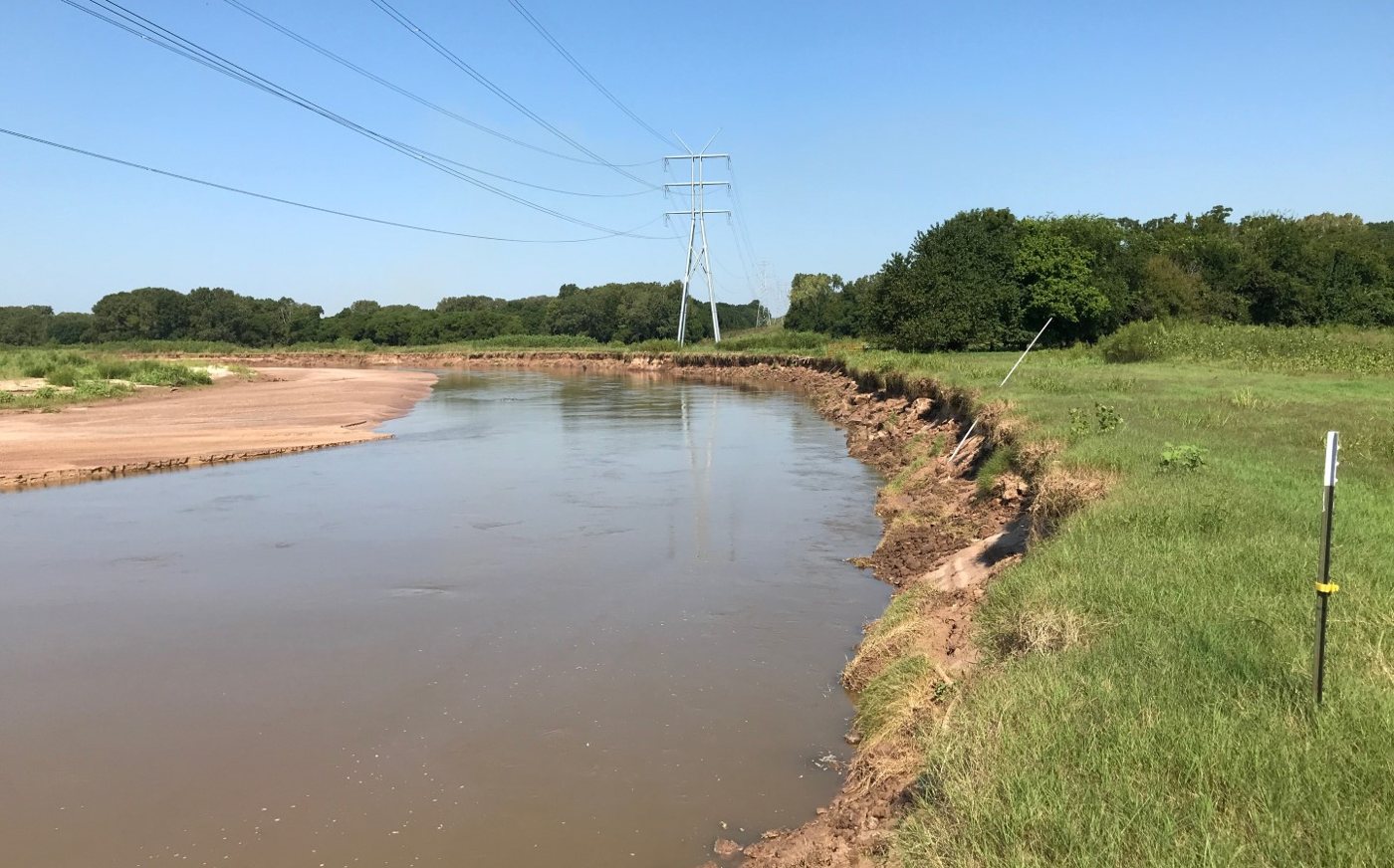
Erosion is moving toward a tower or pole foundation.
The bank or slope next to a structure is retreating.
What's driving it
Channel migration or concentrated runoff working toward the foundation.
How we solve it
We find what is driving the movement, then redirect flow or stabilize the slope before the foundation is reached.
What you're seeing
Rights-of-way and access roads are washing out.
Gullies, ruts and washed-out crossings along the right-of-way limit access for crews.
What's driving it
Runoff concentrated along cleared corridors and low-water crossings.
How we solve it
We stabilize the corridor and its crossings with systems that carry the flow and, where possible, revegetate.
What you're seeing
Pond or lagoon embankments are eroding.
Embankment faces are sloughing and the crest is narrowing.
What's driving it
Wave action, fluctuating water levels and runoff over the face.
How we solve it
We armor the embankment face with protection designed for the range of water levels and how the facility operates.
In the field
Before
After
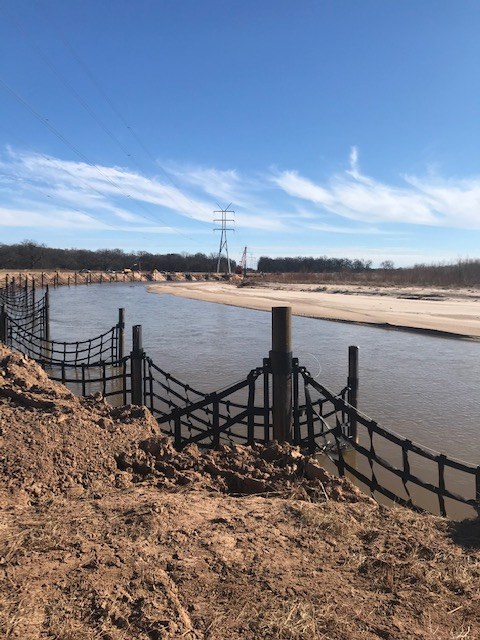
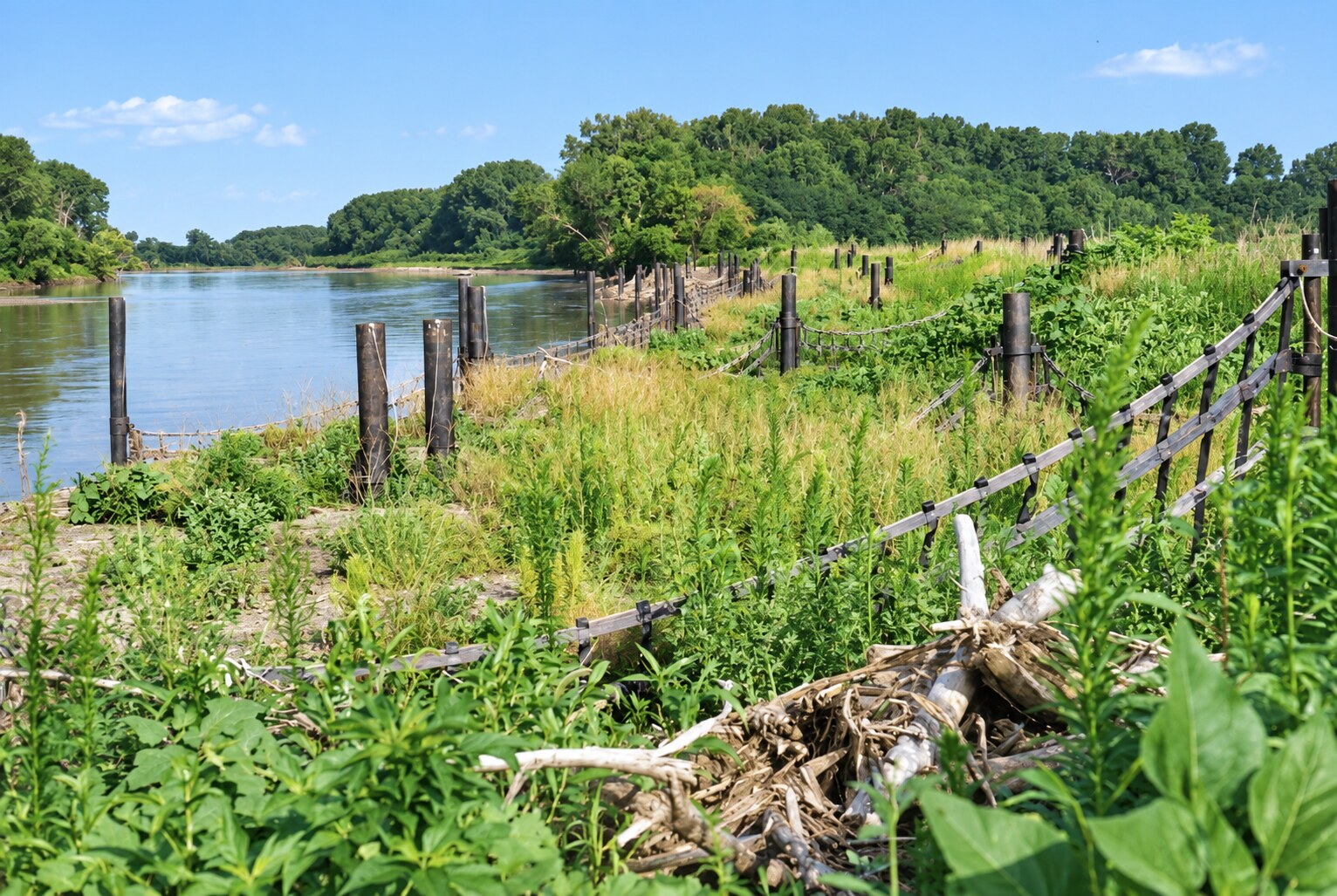
When a river starts cutting toward a transmission line, the structures beside it are next. We armored the banks and channels to protect the utility infrastructure.
Before
After
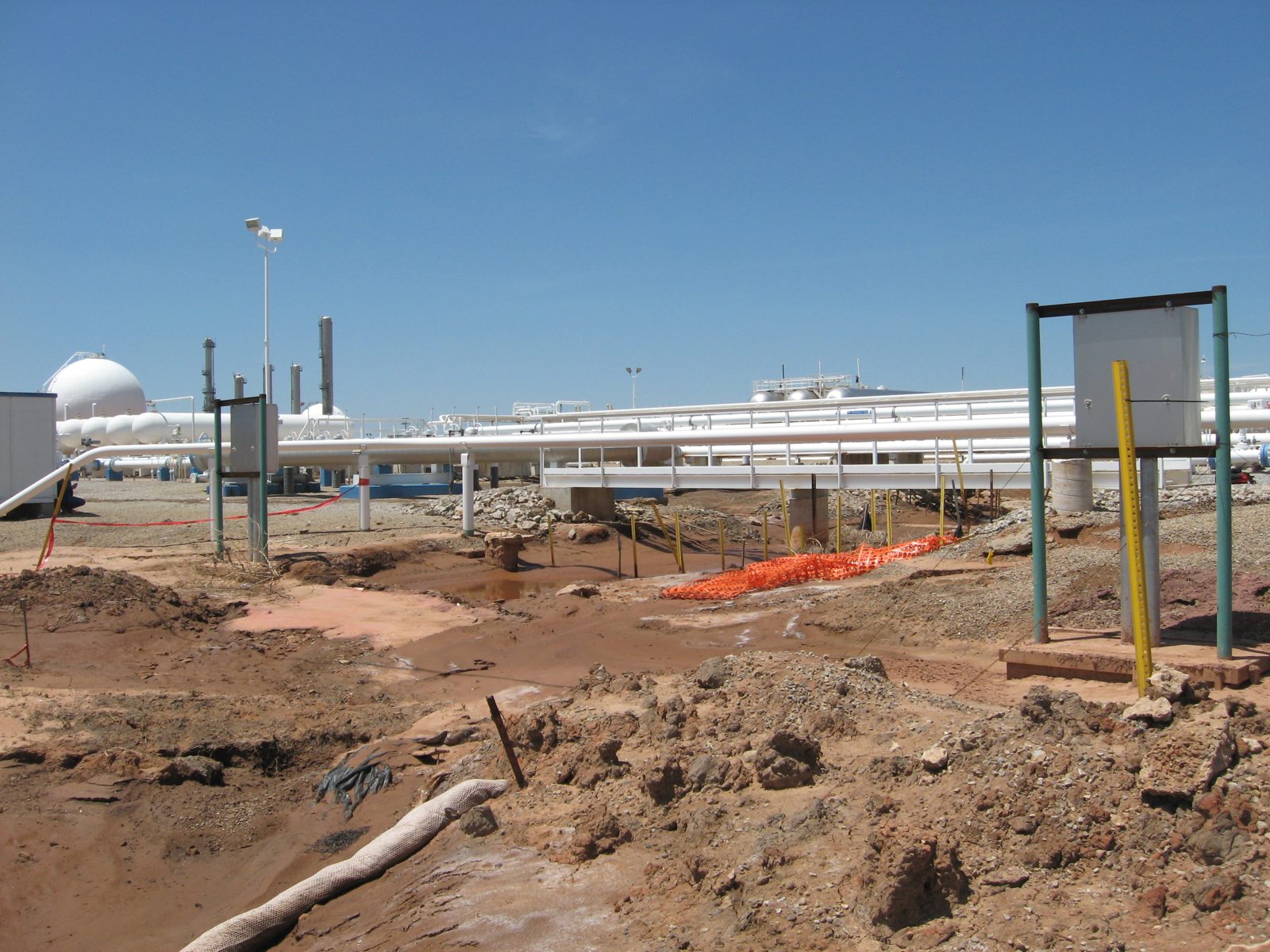
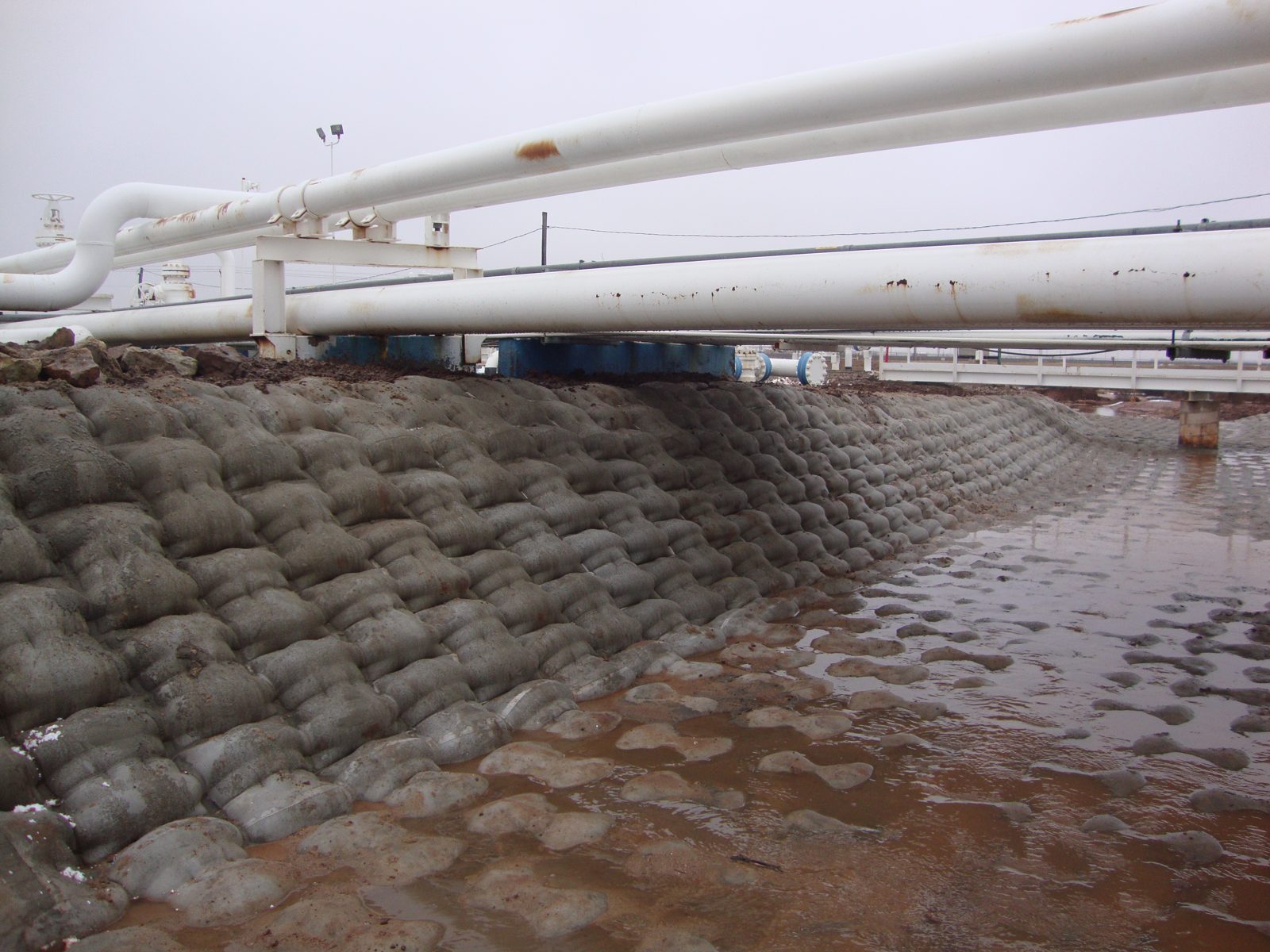
Runoff at this processing plant had carved the drainage under the pipe racks into open ditches. We lined the channel to protect the ground the supports stand on and mitigate sediment flow.
Before
After
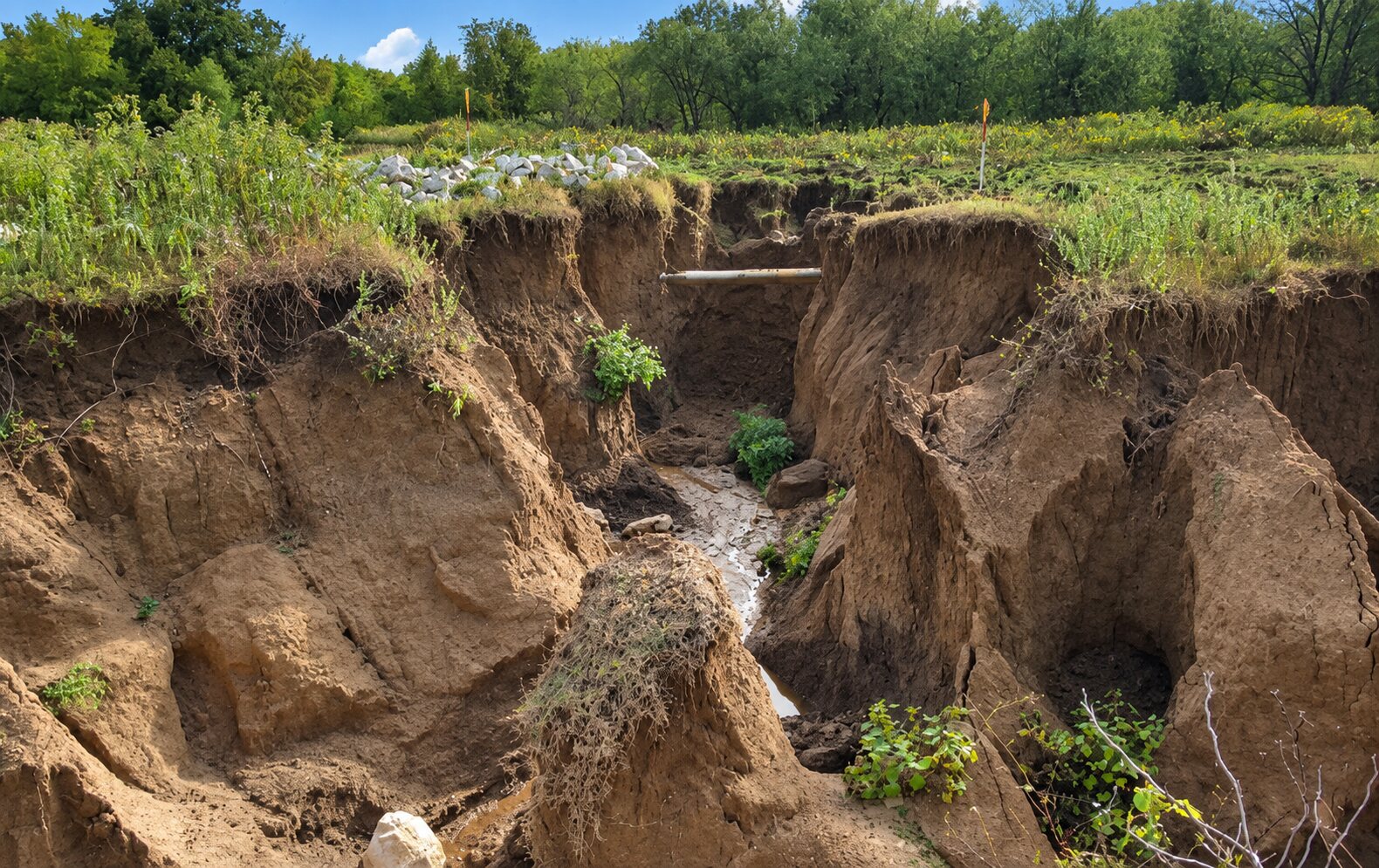
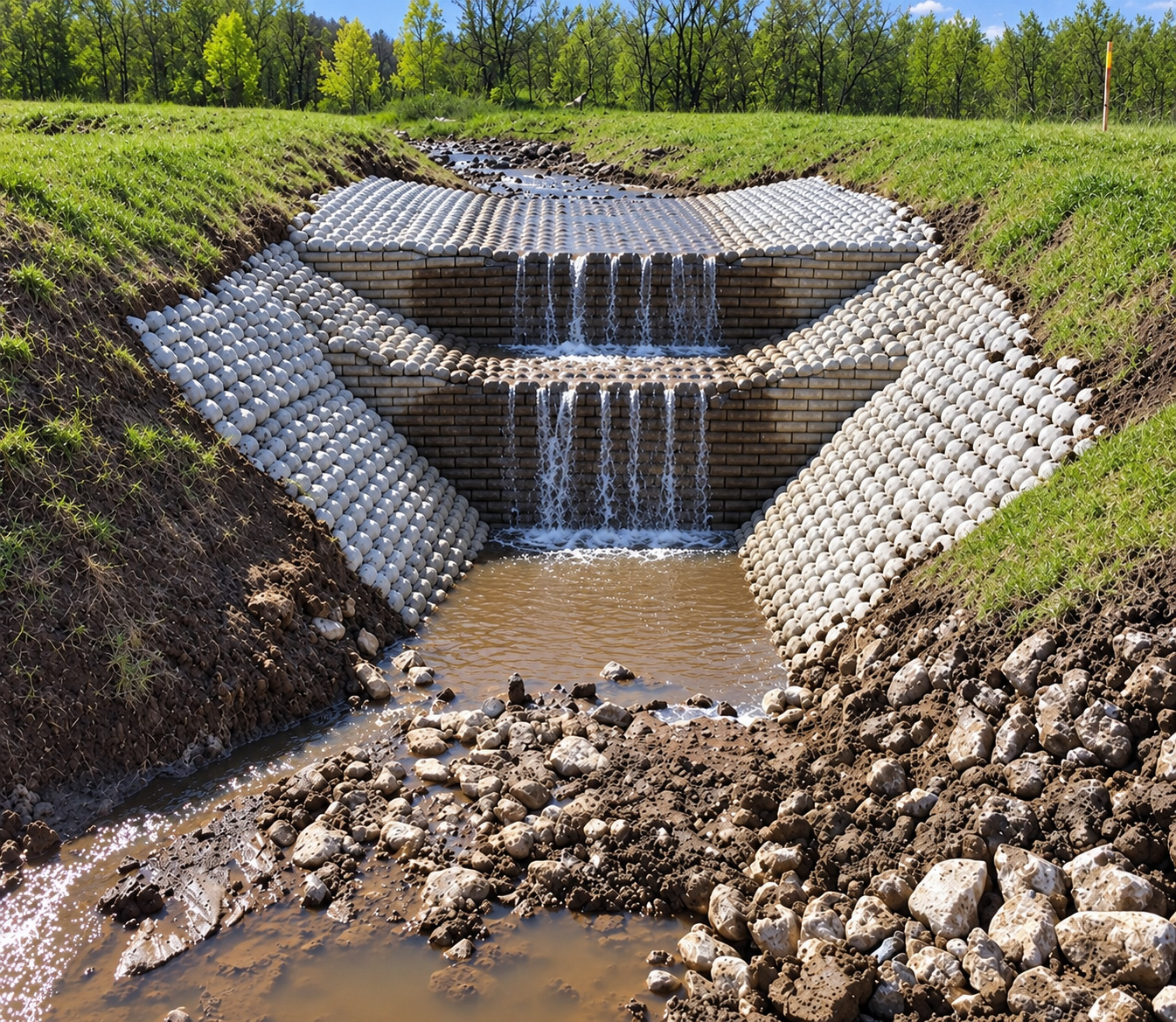
A headcut was cutting its way upstream through open ground, taking more land with every storm. We installed stepped grade control to stop the knickpoint and step the water down safely to the channel below.
Before
After
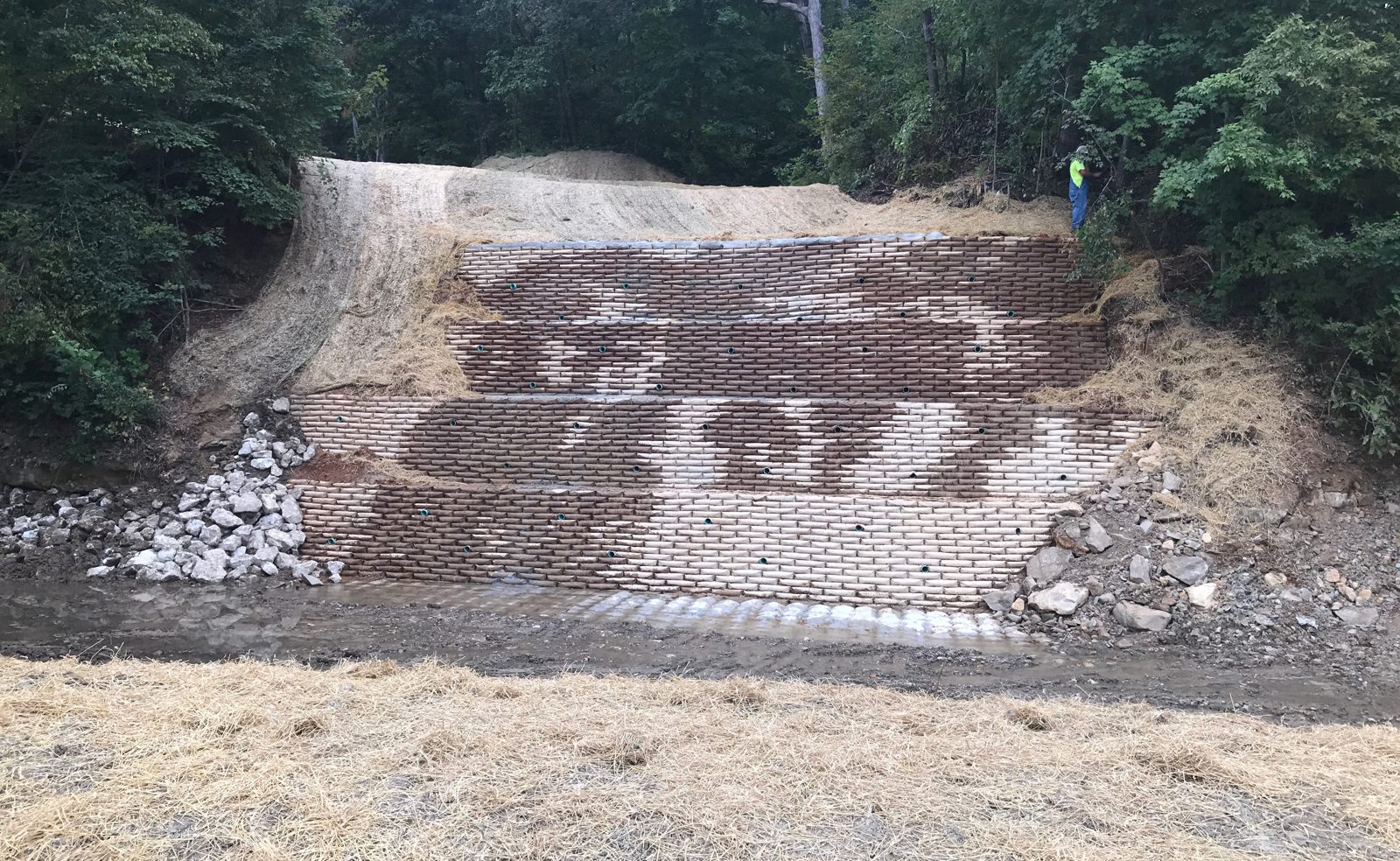
Meandering creeks see changing water levels and flow rates, and they can expose a pipeline quickly. We rebuilt this bank as a stepped wall over the line.
Before
After
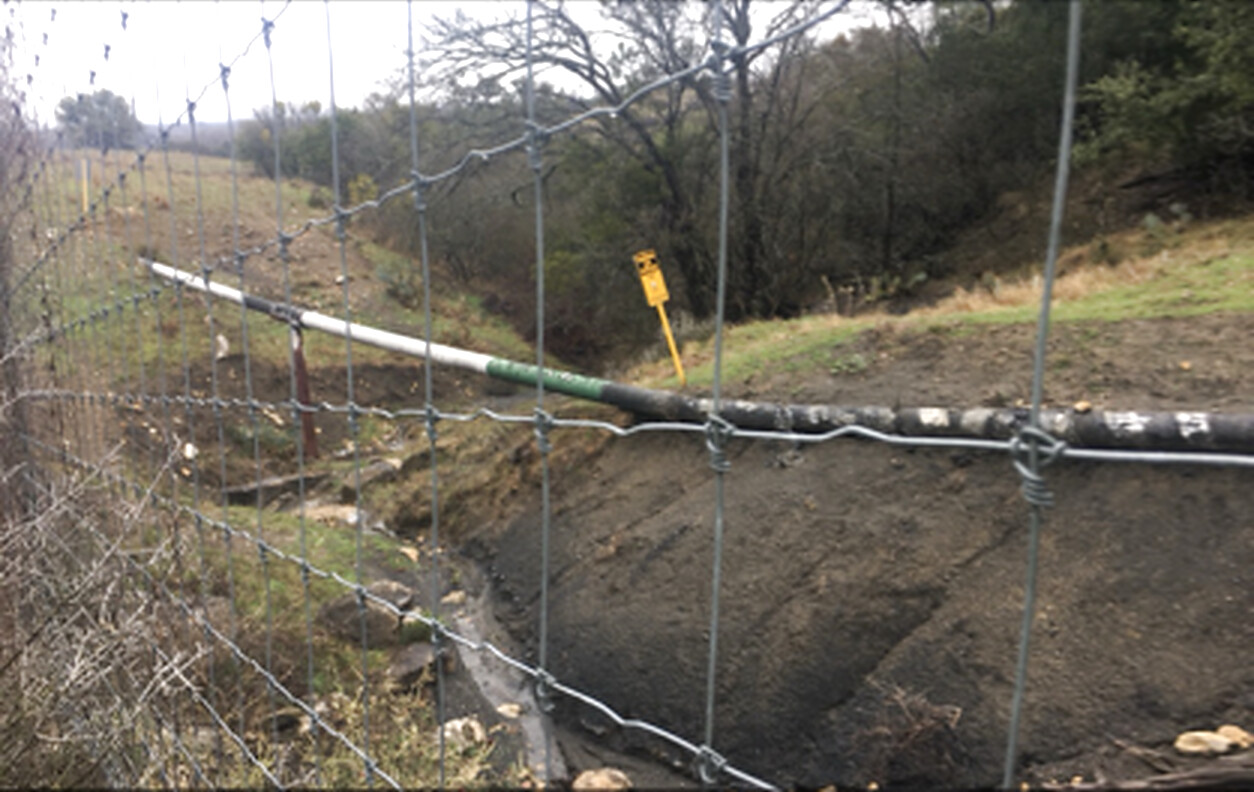
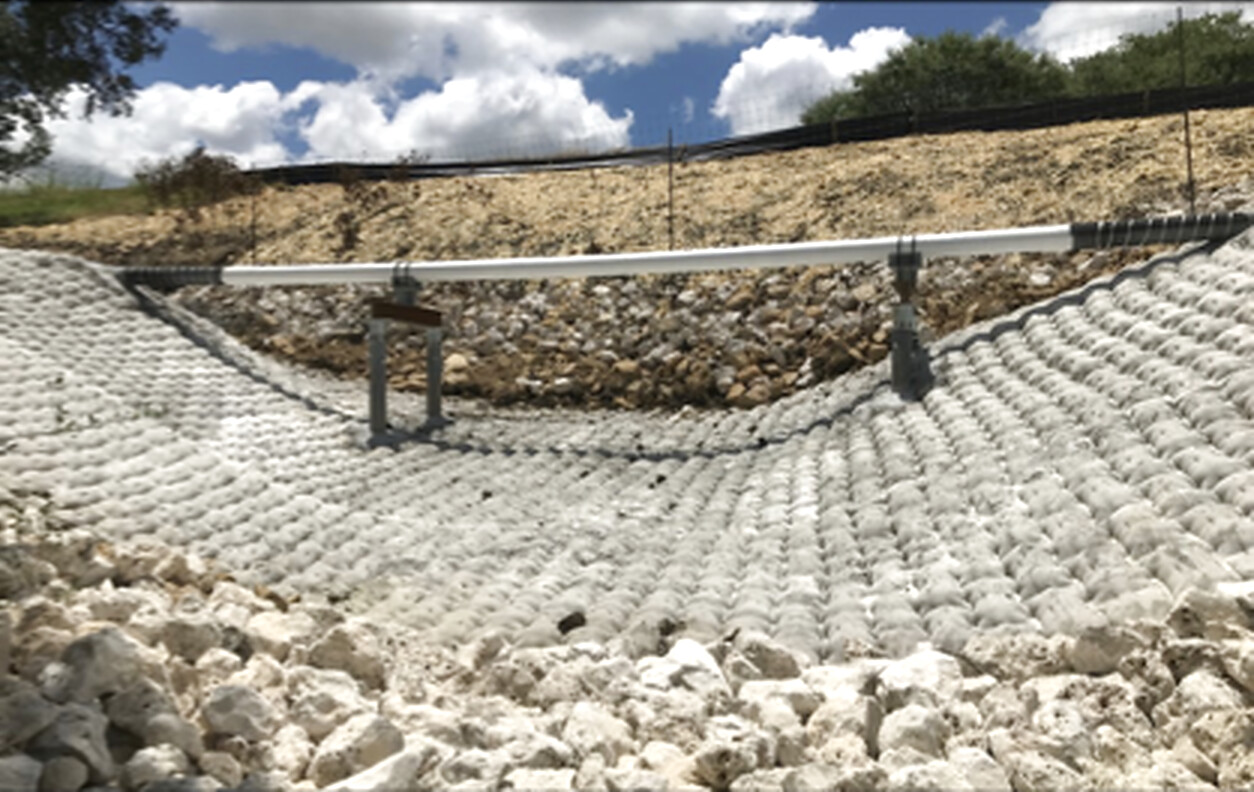
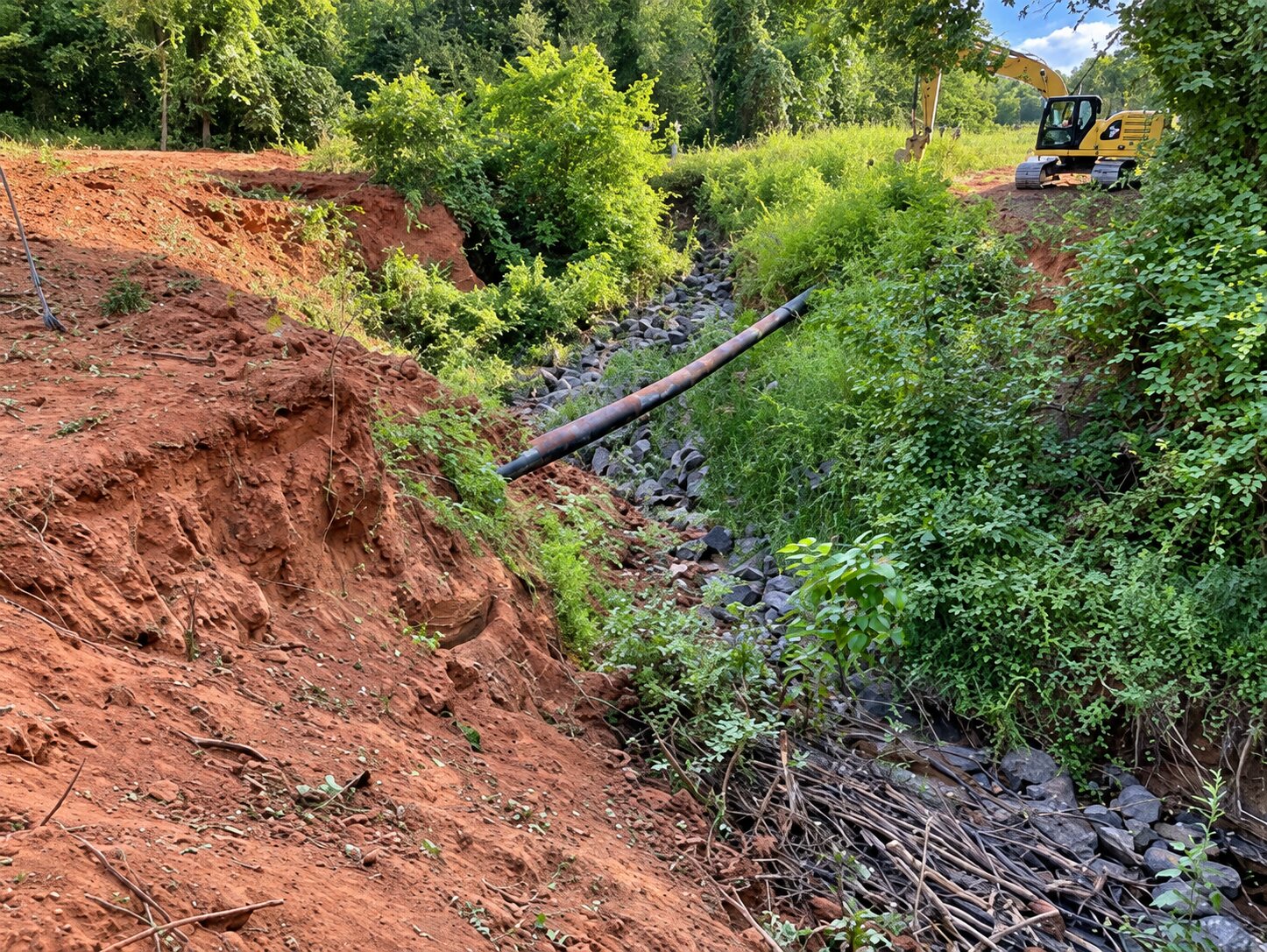
Over time, erosion can leave a pipeline spanning a ravine it was never meant to cross. That calls for prompt work: support beneath the pipeline and armoring around it.
Before
After
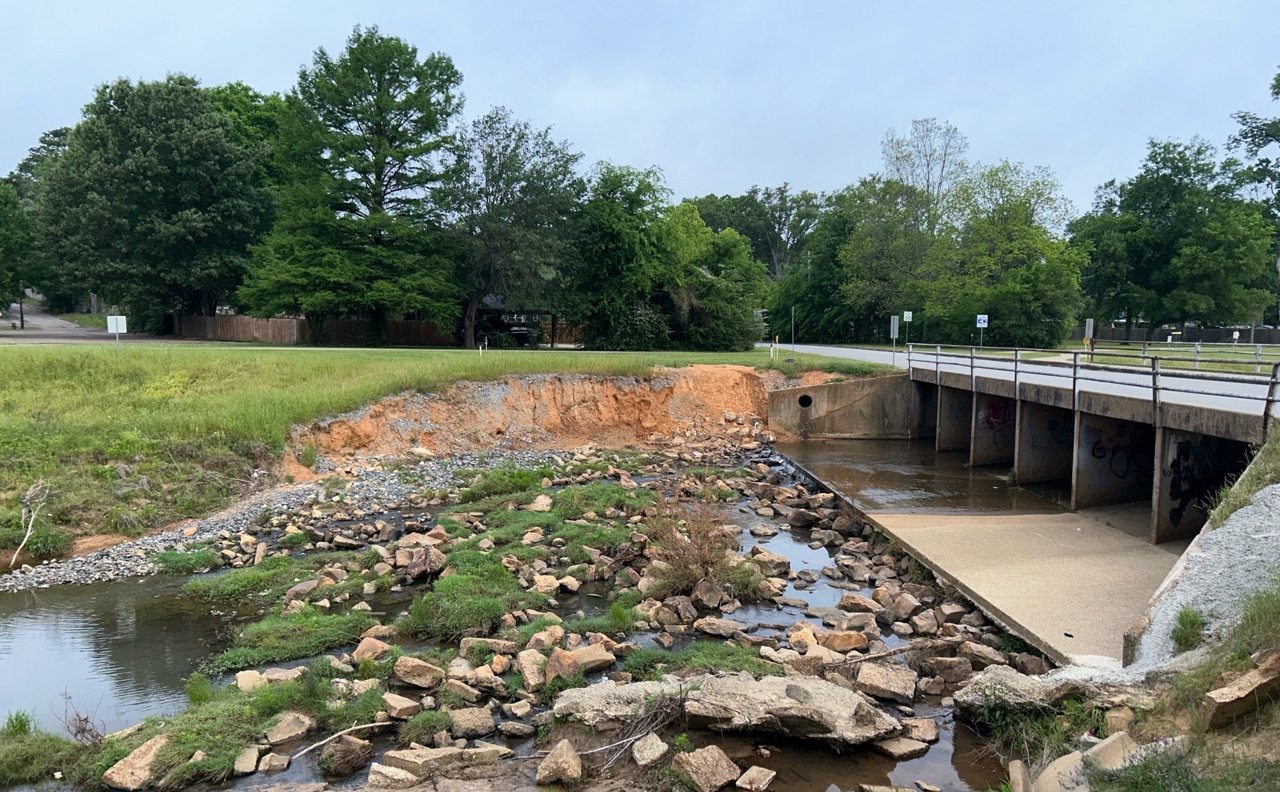
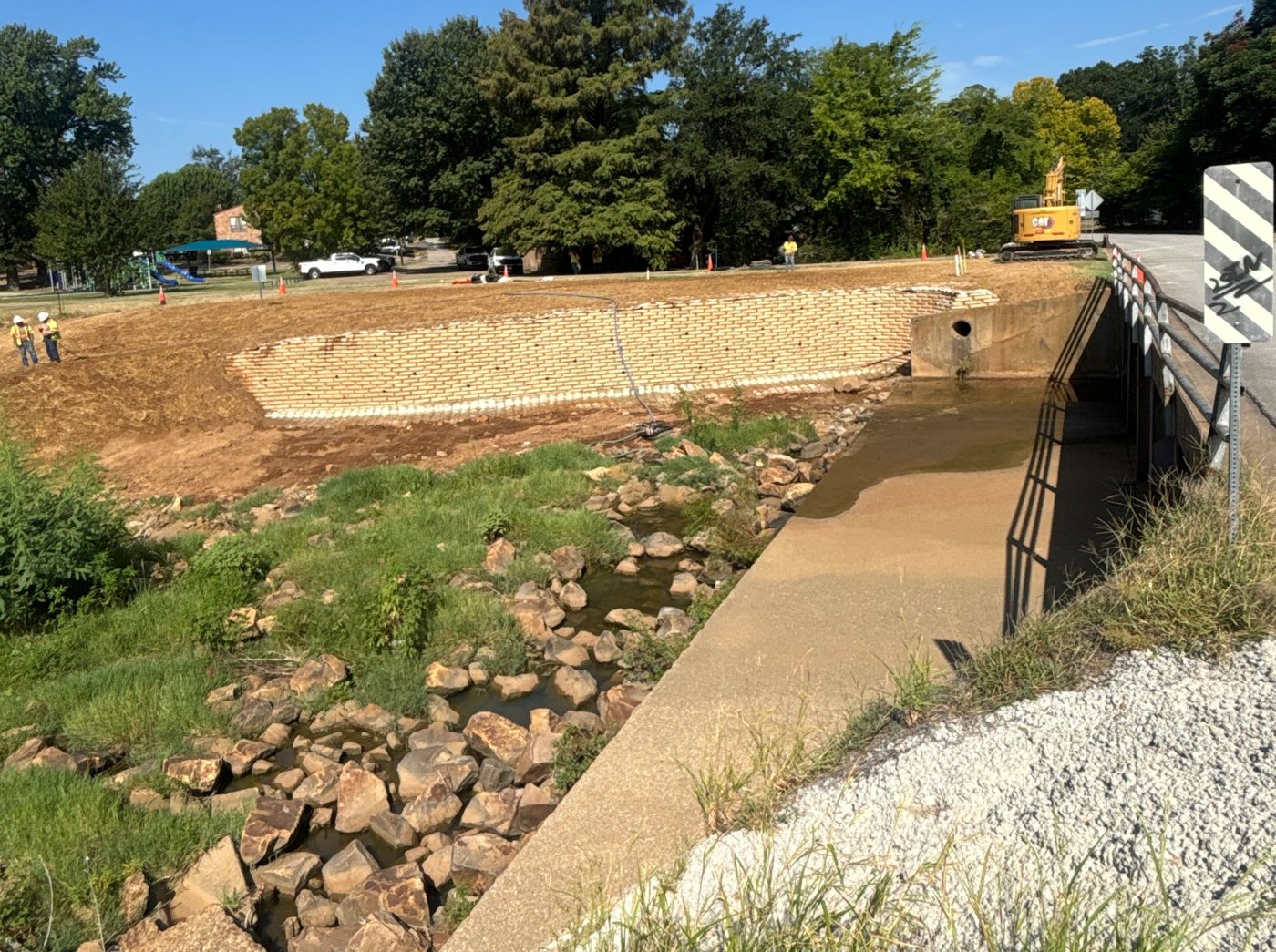
Flow through this road crossing had cut the bank beside it back toward the road. We rebuilt the bank and armored it where the flow leaves the crossing.
Before
After
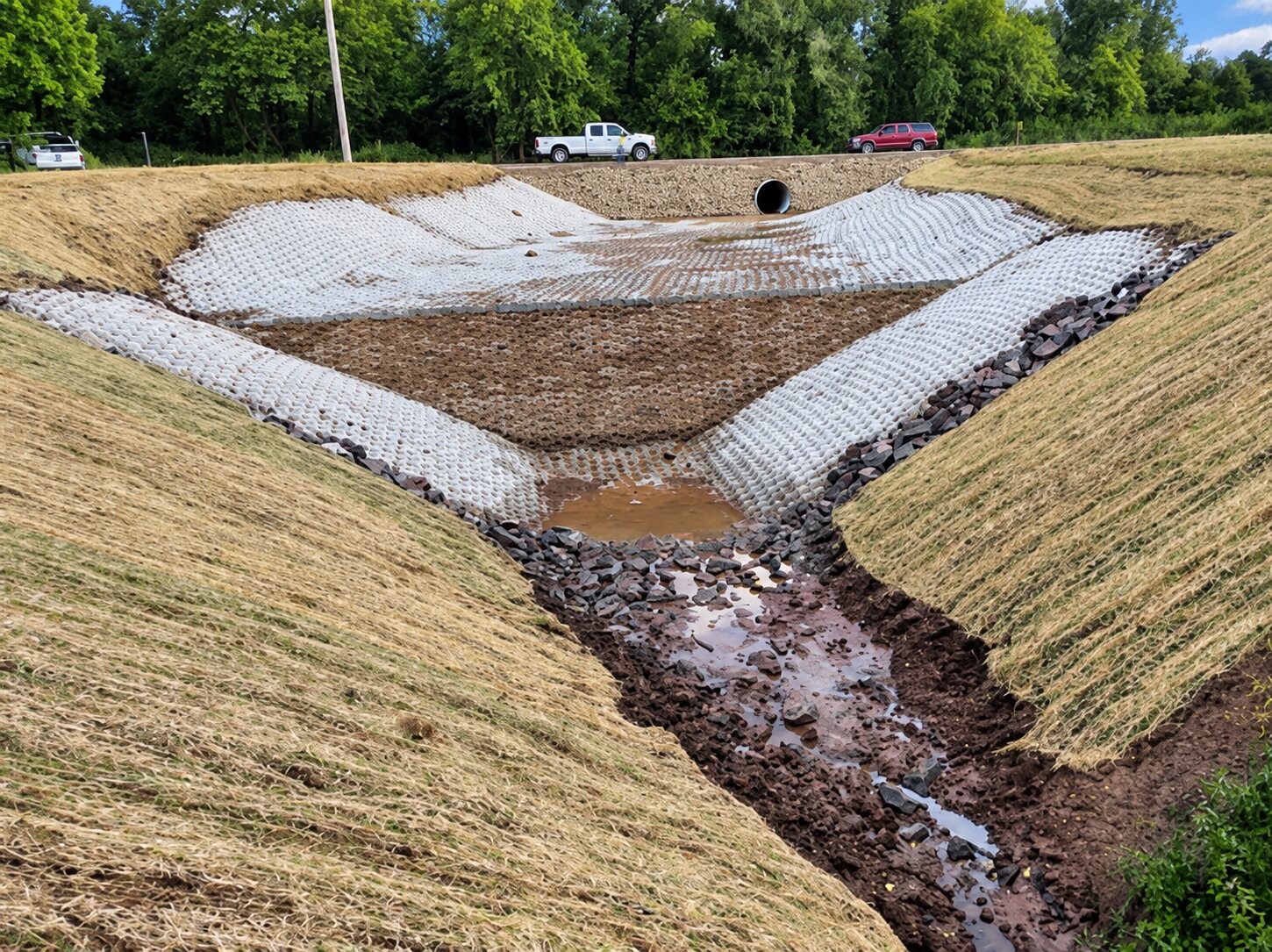
Below a roadway, runoff cut this drainage channel deep into red clay and exposed the line running through it. We rebuilt it as a lined channel, from the road culvert down, that holds its grade.
Before
After
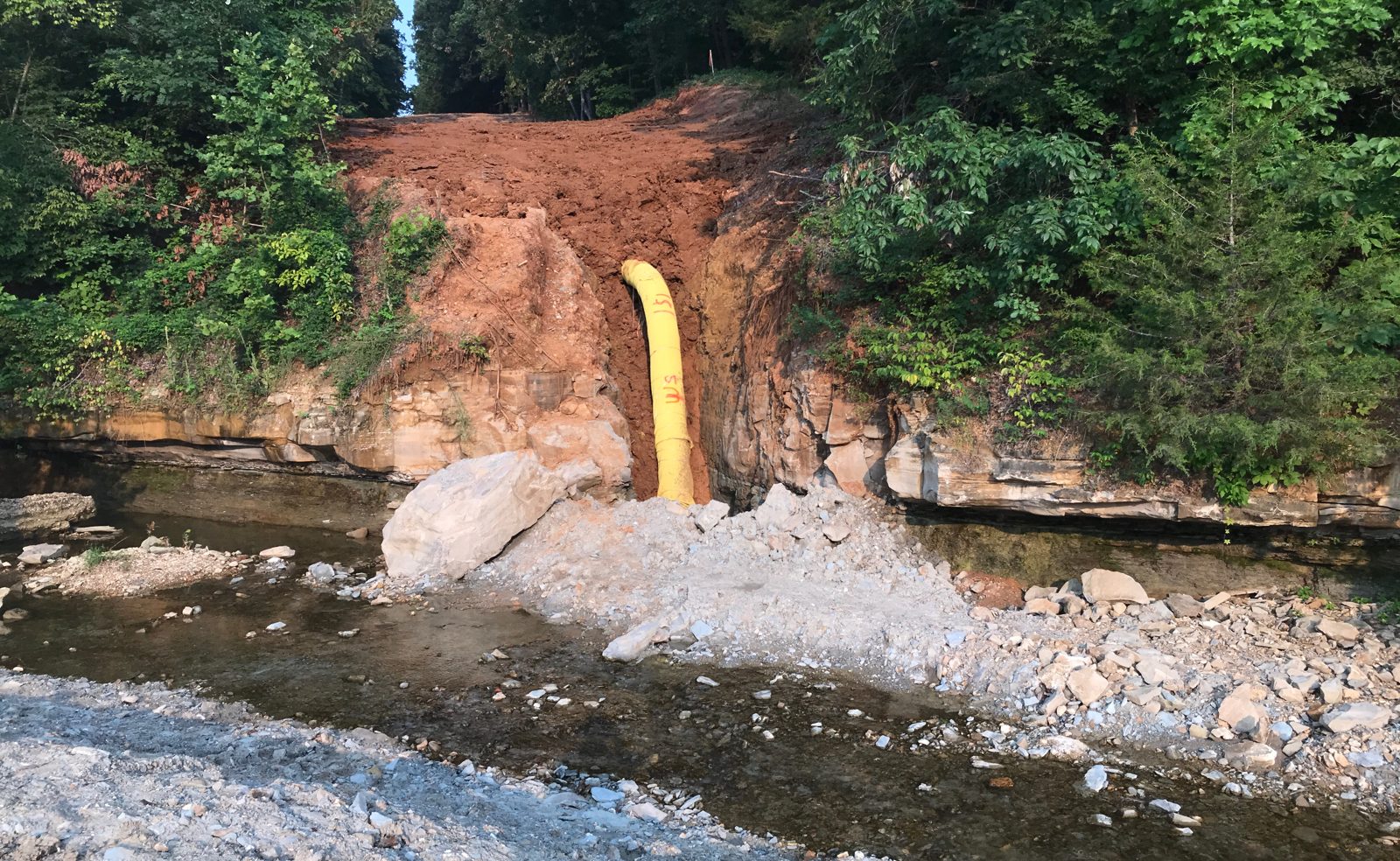
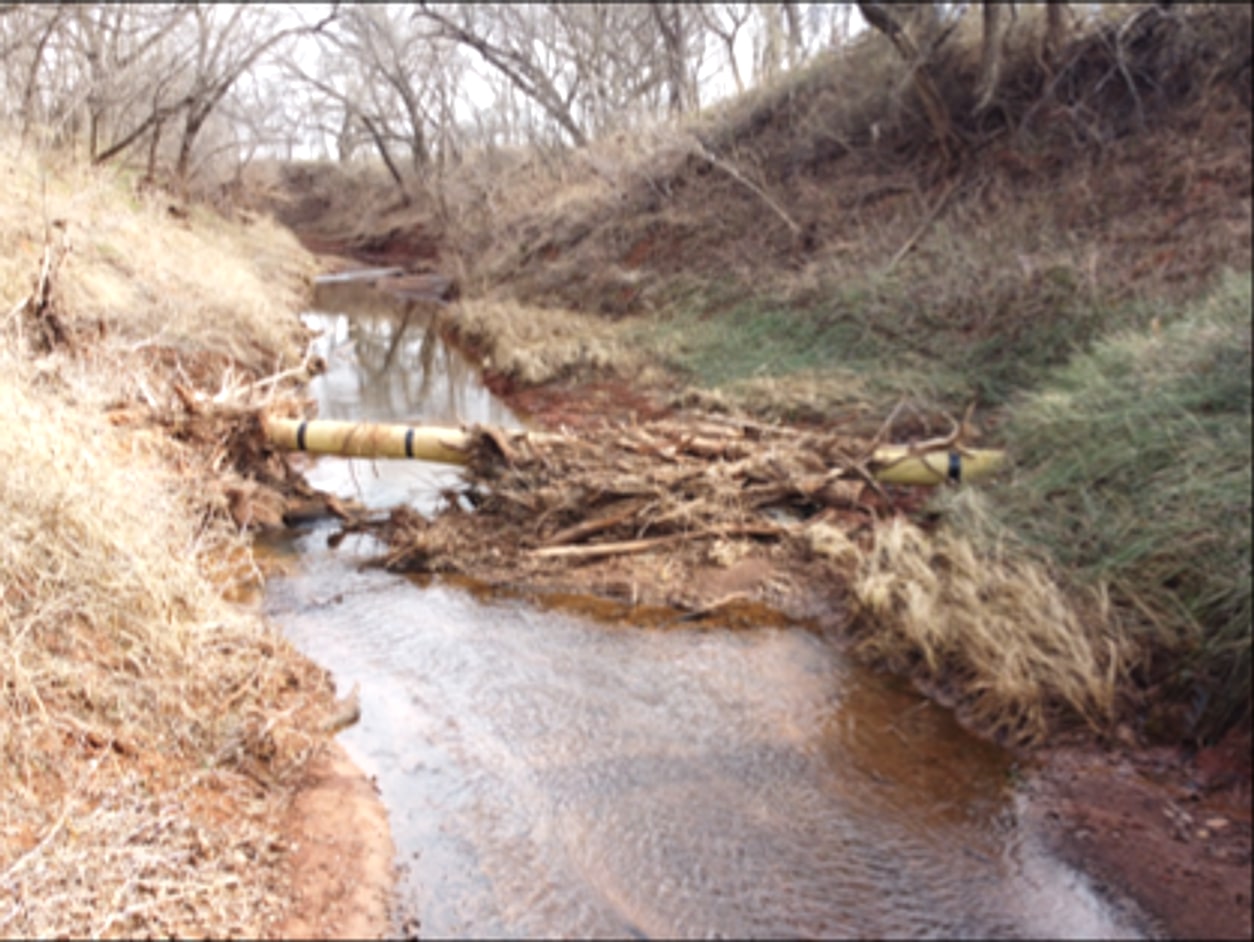
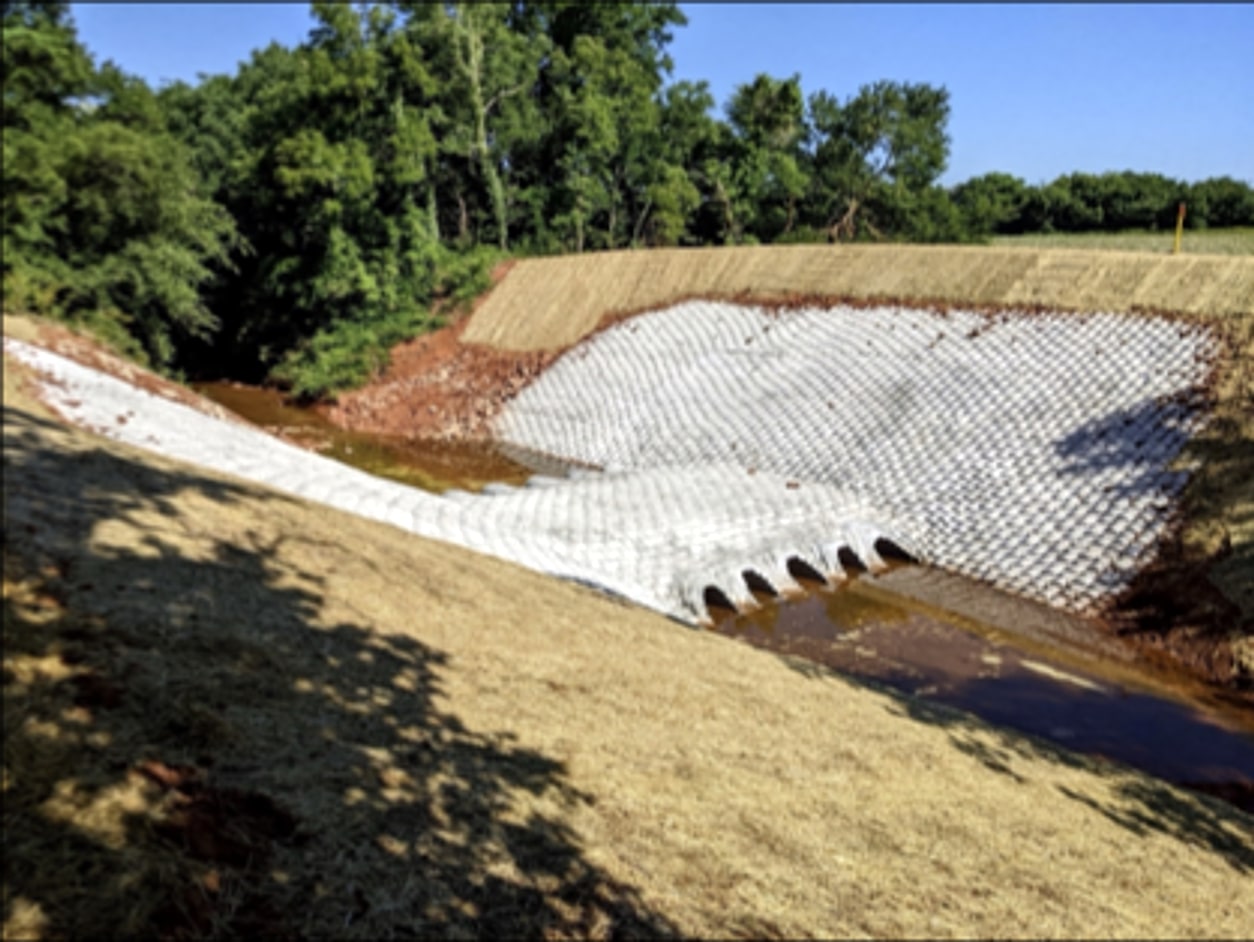
Debris and high flows scoured this creek crossing until the line beneath it was exposed. We restored the cover and rebuilt the crossing over new culverts.
Before
After
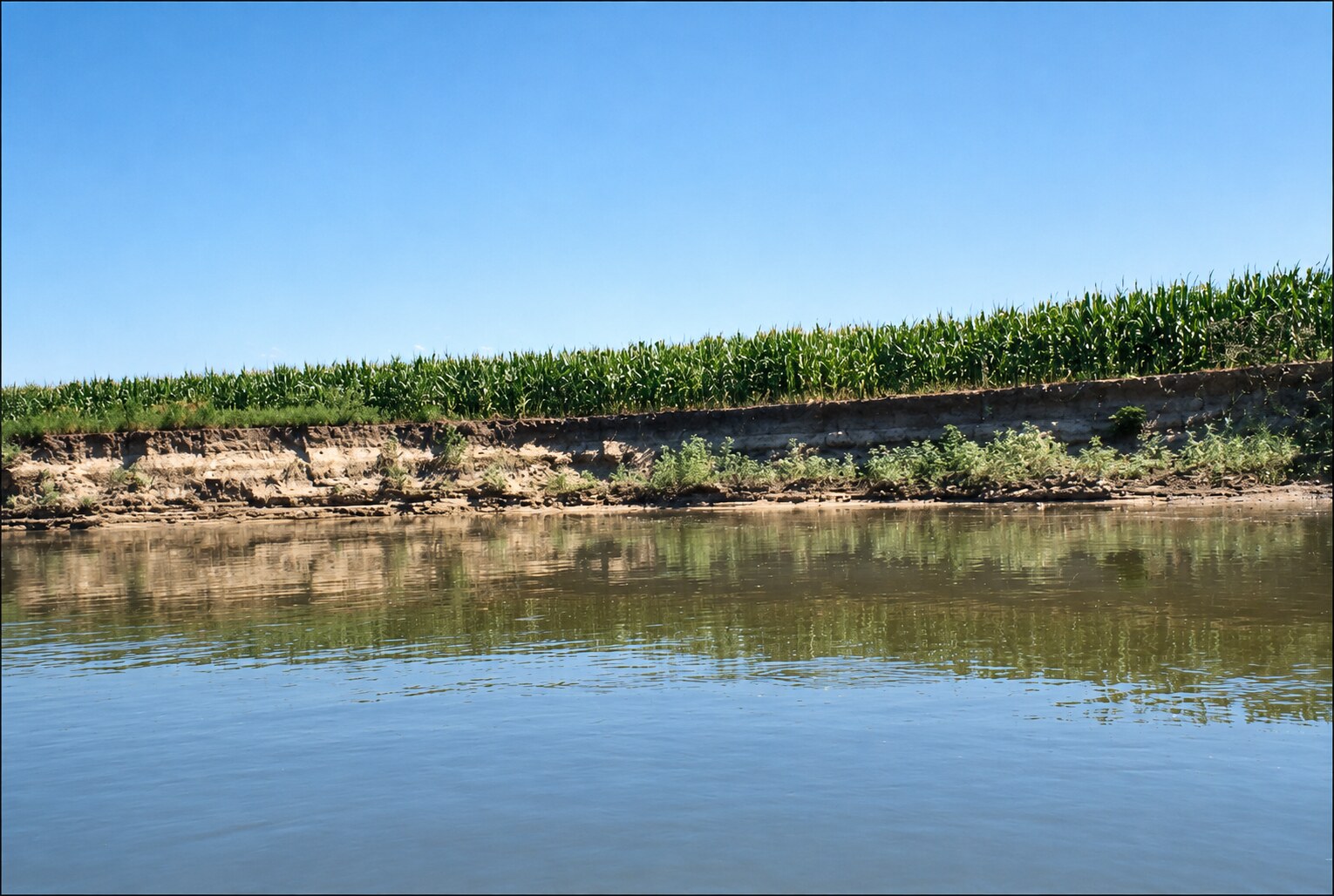
The river was taking this bank, and the farmland above it, with every high water event. Five years after the work, the bank is rebuilt and green.
How we work
One team, from site investigation through construction.
Whatever the industry, every project follows the same six steps, and our own people carry it through each one. Nothing is handed off to another firm along the way.