Protect the structure by fixing the channel beneath it.
Bridges, culverts, embankments and approaches sit where water concentrates. Scour and bank retreat work out of sight until they threaten the structure, the roadbed or the track.
What you're seeingWhat's driving itHow we solve it
What you're seeing
Scour at bridge piers or abutments.
Bed material is disappearing around foundations and the channel is deepening at the crossing.
What's driving it
The crossing constricts the channel, accelerating flow that strips material from around the structure.
How we solve it
We investigate the scour at the crossing and design articulating concrete protection that conforms to the bed around piers and abutments.
What you're seeing
The bank is retreating under a rail subgrade or highway approach.
The embankment is steepening, slumping or losing ground to the channel beside it.
What's driving it
Channel migration pushing high-velocity flow into the bank that carries the subgrade or approach.
How we solve it
We redirect the flow away from the embankment and armor the bank so the subgrade keeps its support.
What you're seeing
A culvert outlet is eroding.
A scour hole has formed at the outlet, the apron is undercut, or the embankment above it is slumping.
What's driving it
Concentrated, high-velocity discharge leaving the culvert with nothing to dissipate it.
How we solve it
We engineer outlet protection sized to the discharge and install it without taking the crossing out of service.
What you're seeing
Roadside channels are cutting down.
Ditches and drainage channels are deepening, side slopes are eroding and headcuts are forming.
What's driving it
Runoff from paved surfaces on steep grades, carried at velocities the channel lining cannot resist.
How we solve it
We line the channel with a connected system that follows the grade and supports vegetation where the flow allows it.
In the field
Before
After
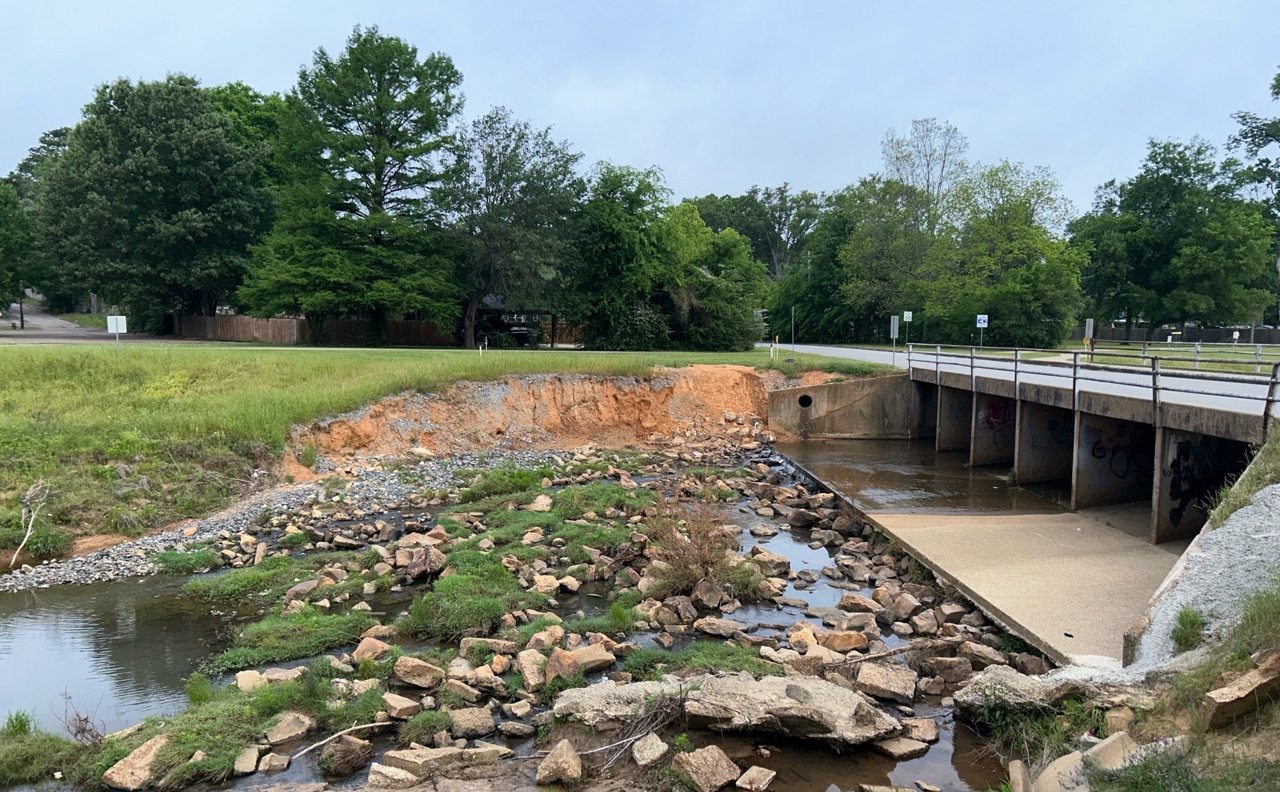
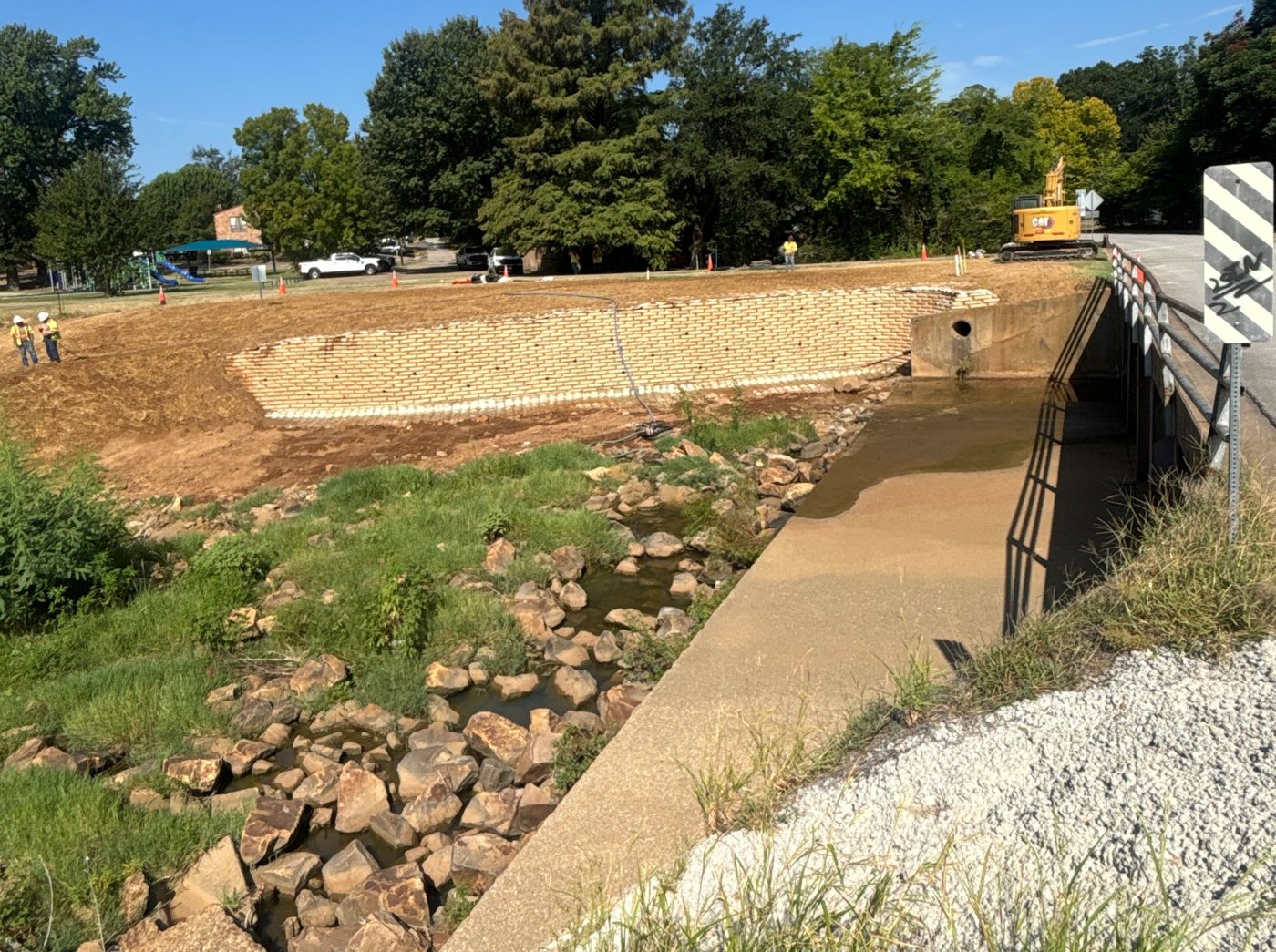
Flow through this road crossing had cut the bank beside it back toward the road. We rebuilt the bank and armored it where the flow leaves the crossing.
Before
After
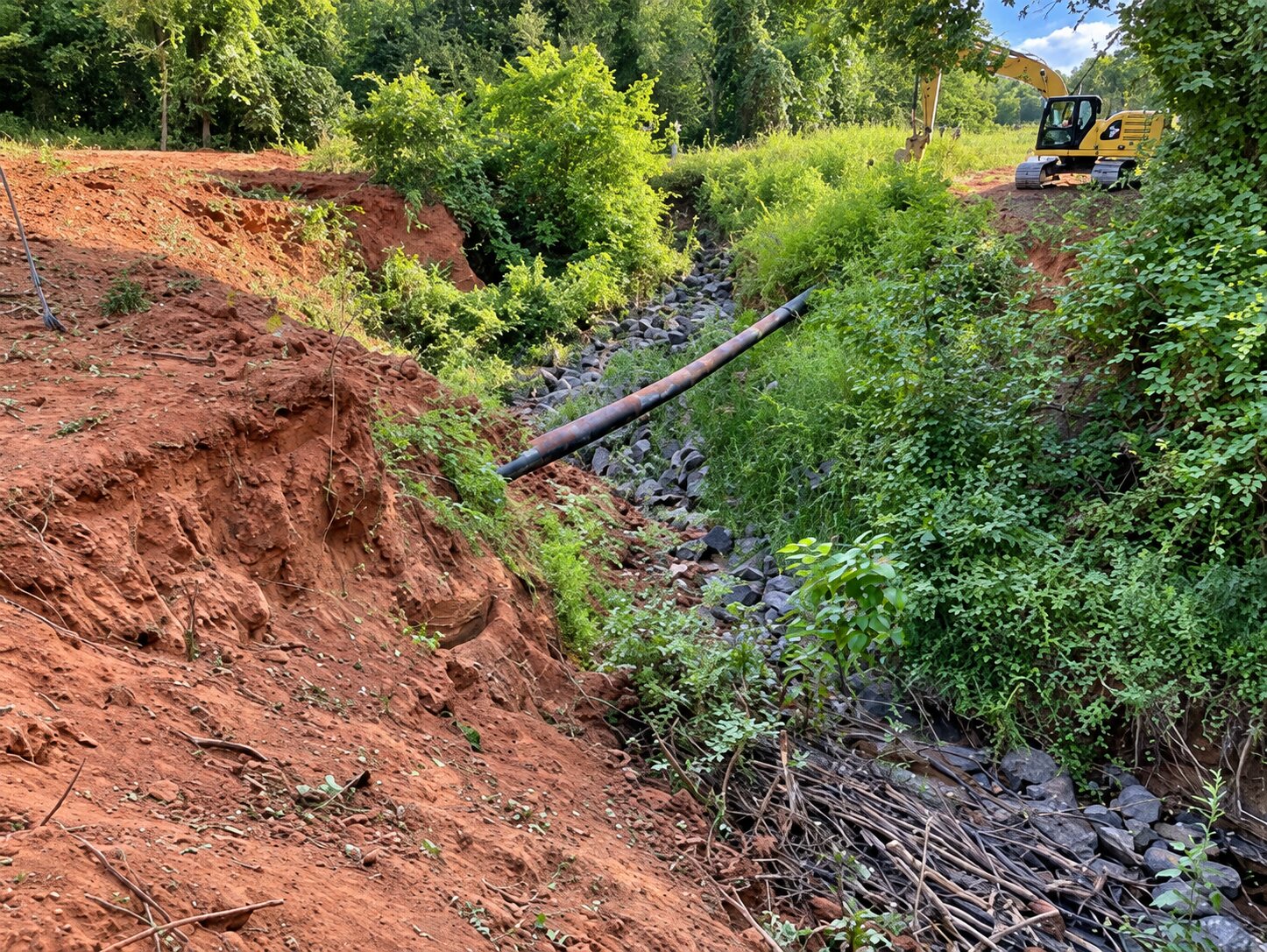
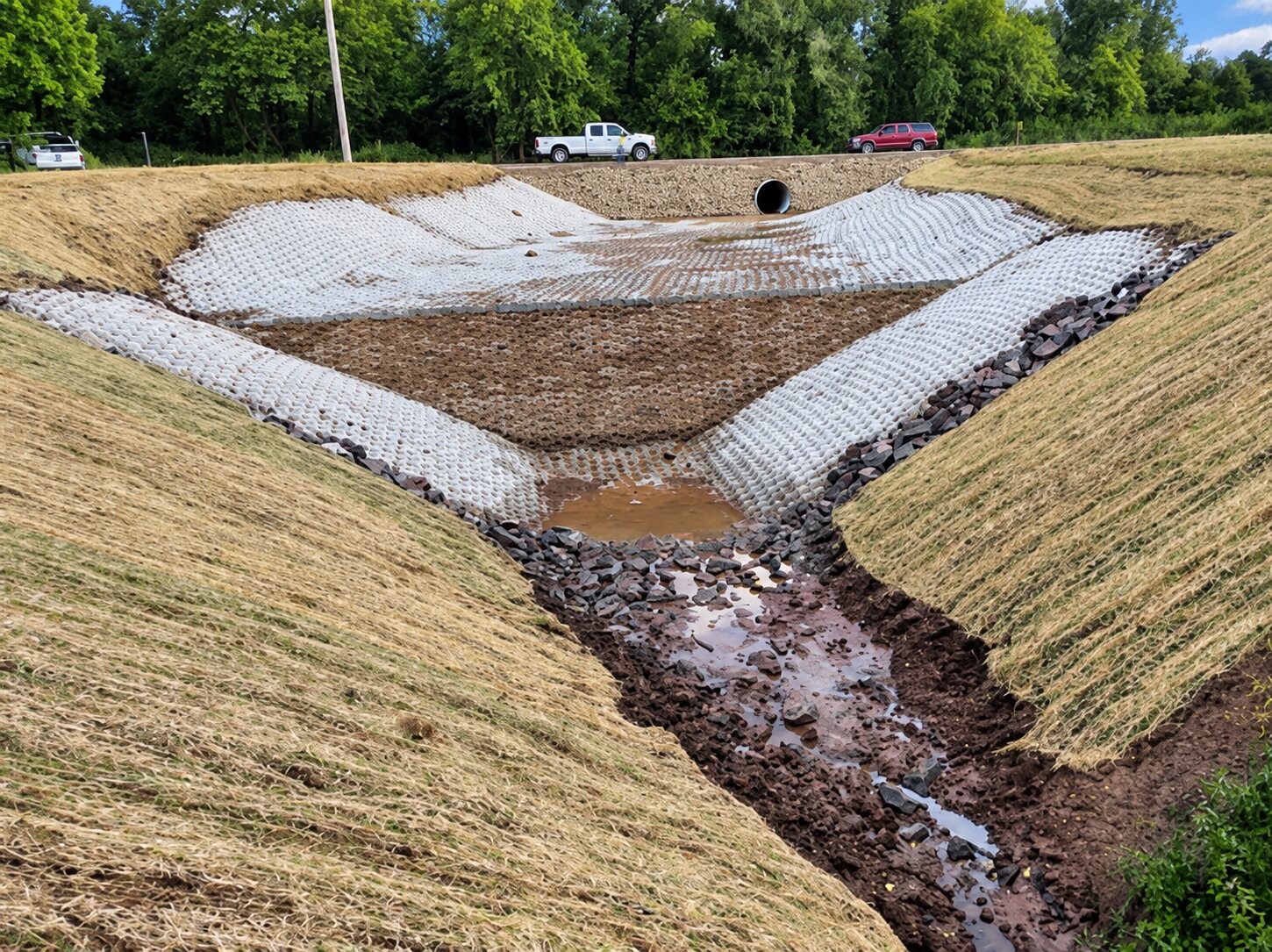
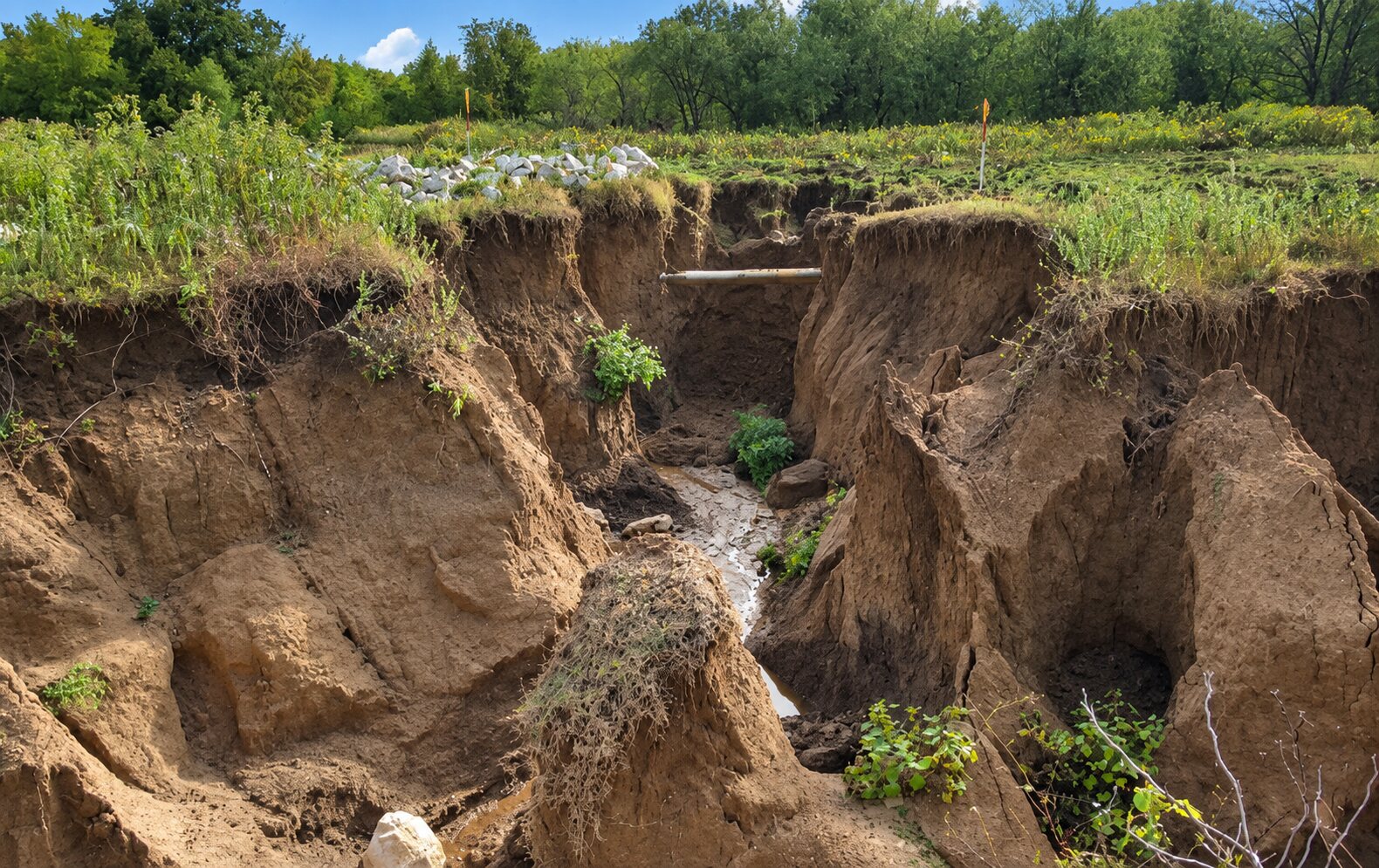
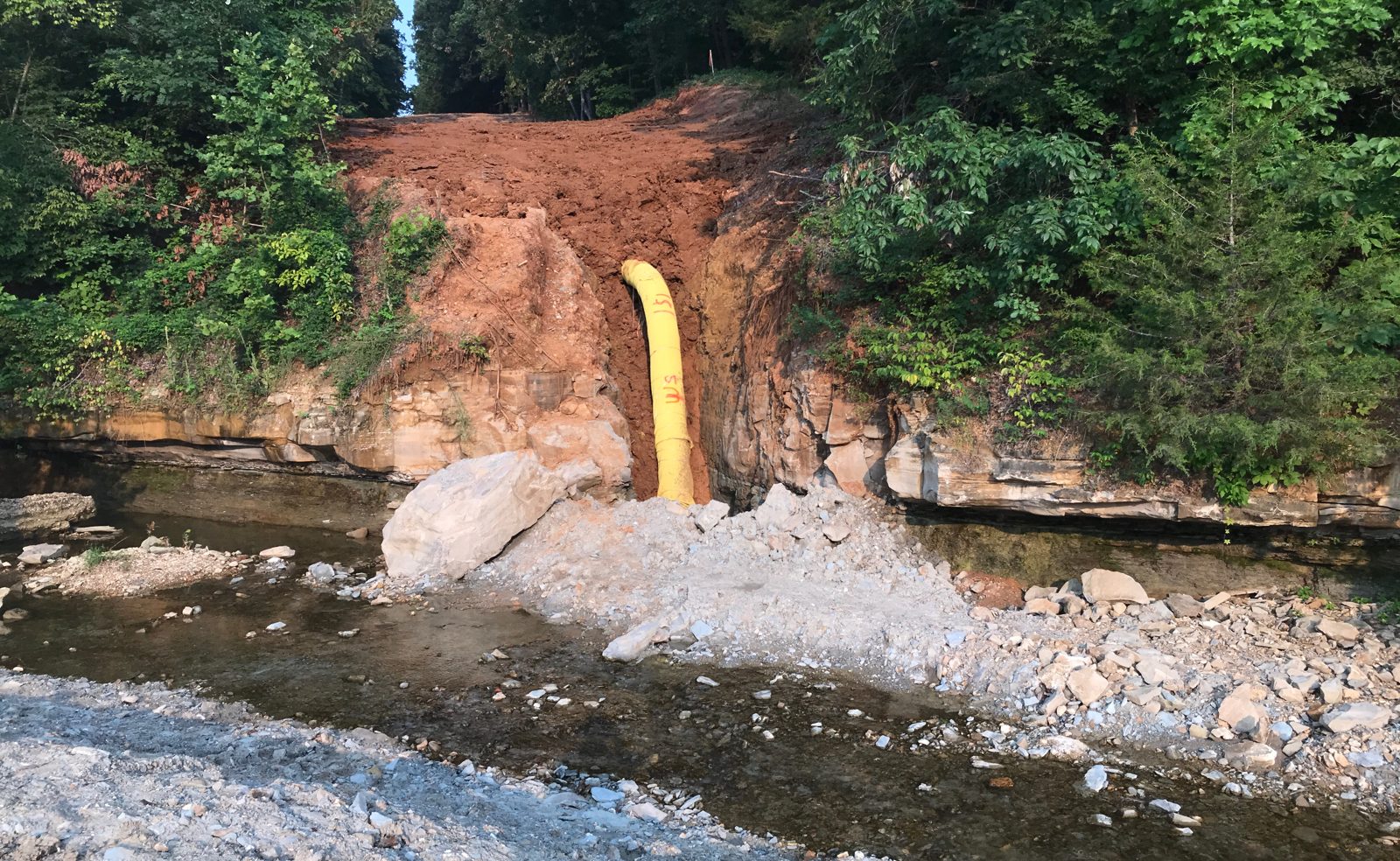
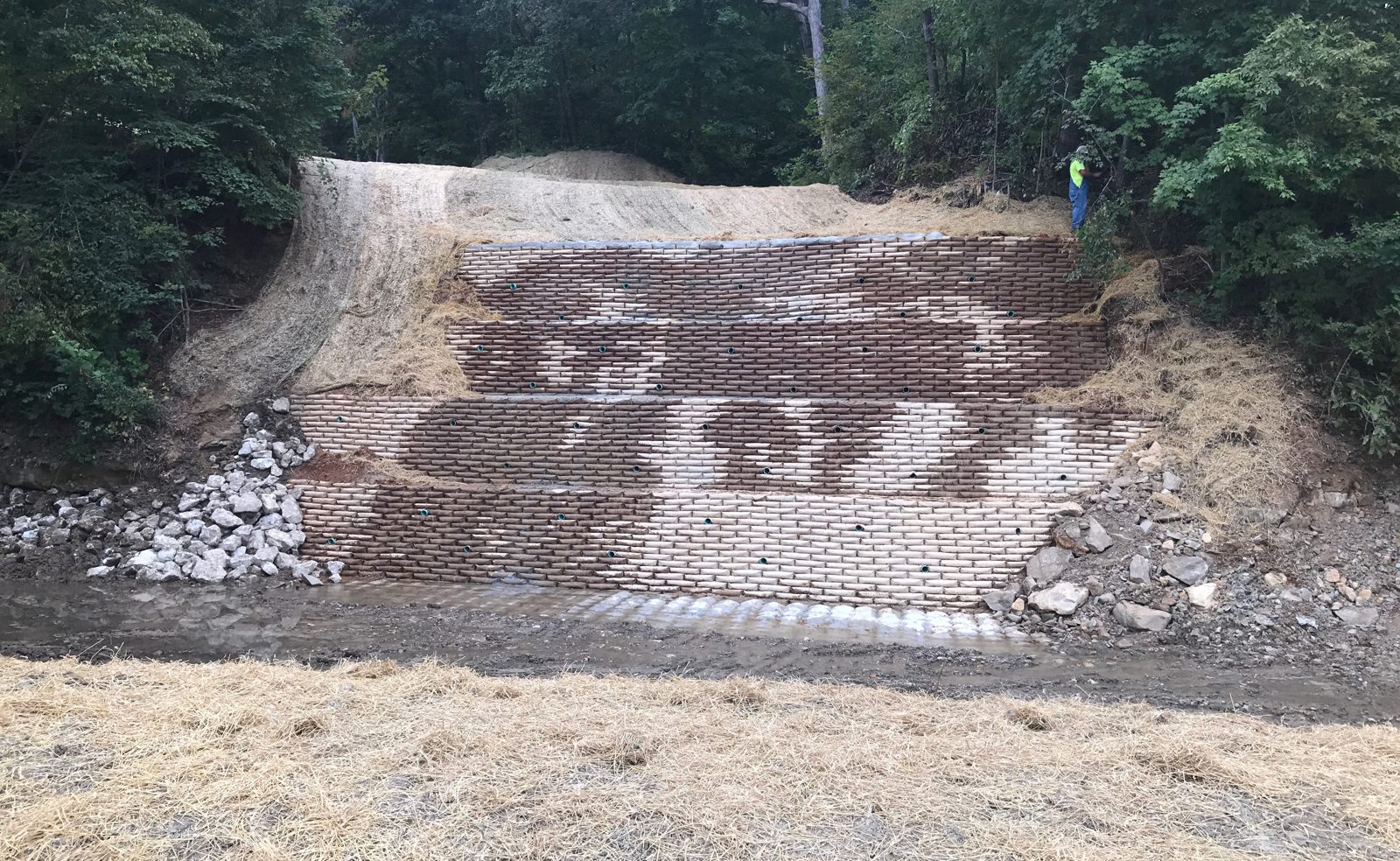
Below a roadway, runoff cut this drainage channel deep into red clay and exposed the line running through it. We rebuilt it as a lined channel, from the road culvert down, that holds its grade.
Before
After
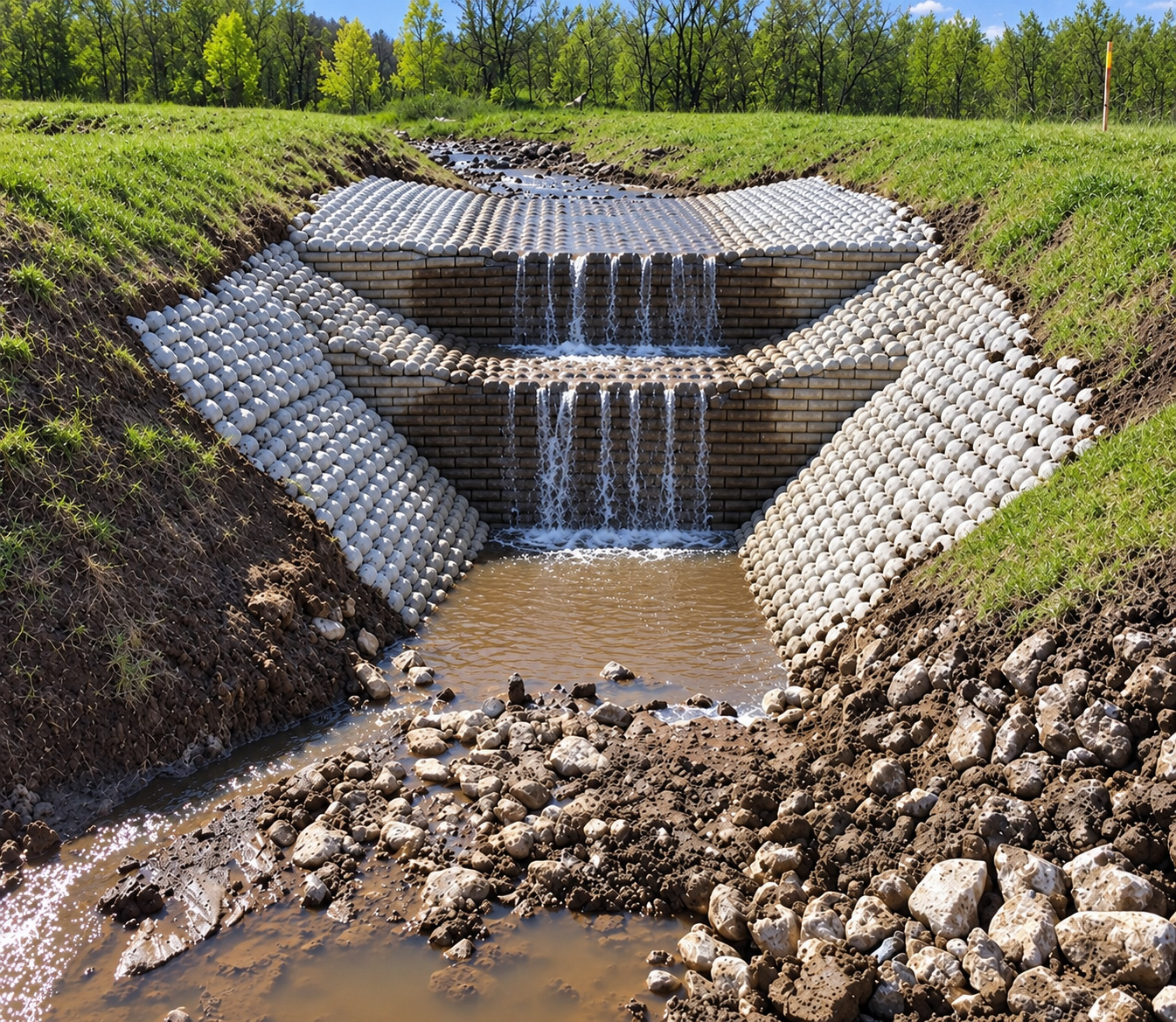
A headcut was cutting its way upstream through open ground, taking more land with every storm. We installed stepped grade control to stop the knickpoint and step the water down safely to the channel below.
Before
After
Meandering creeks see changing water levels and flow rates, and they can expose a pipeline quickly. We rebuilt this bank as a stepped wall over the line.
Before
After
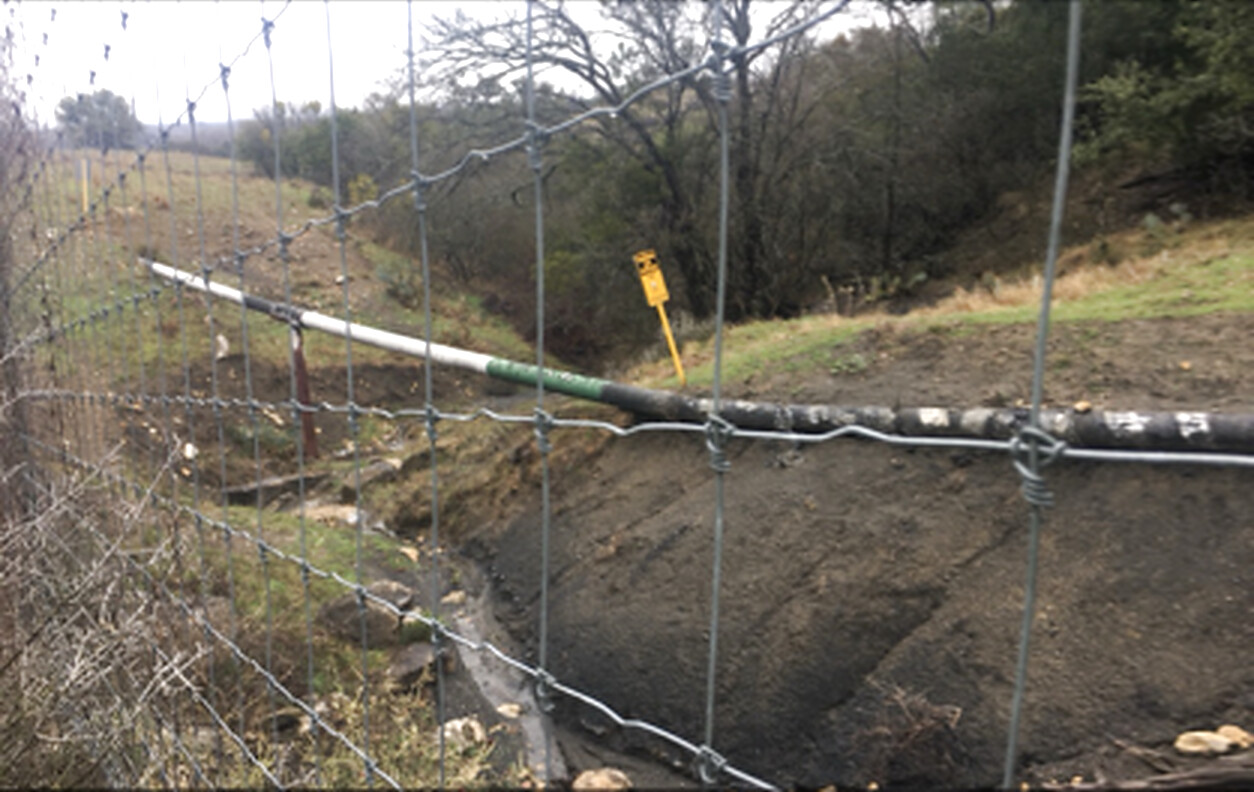
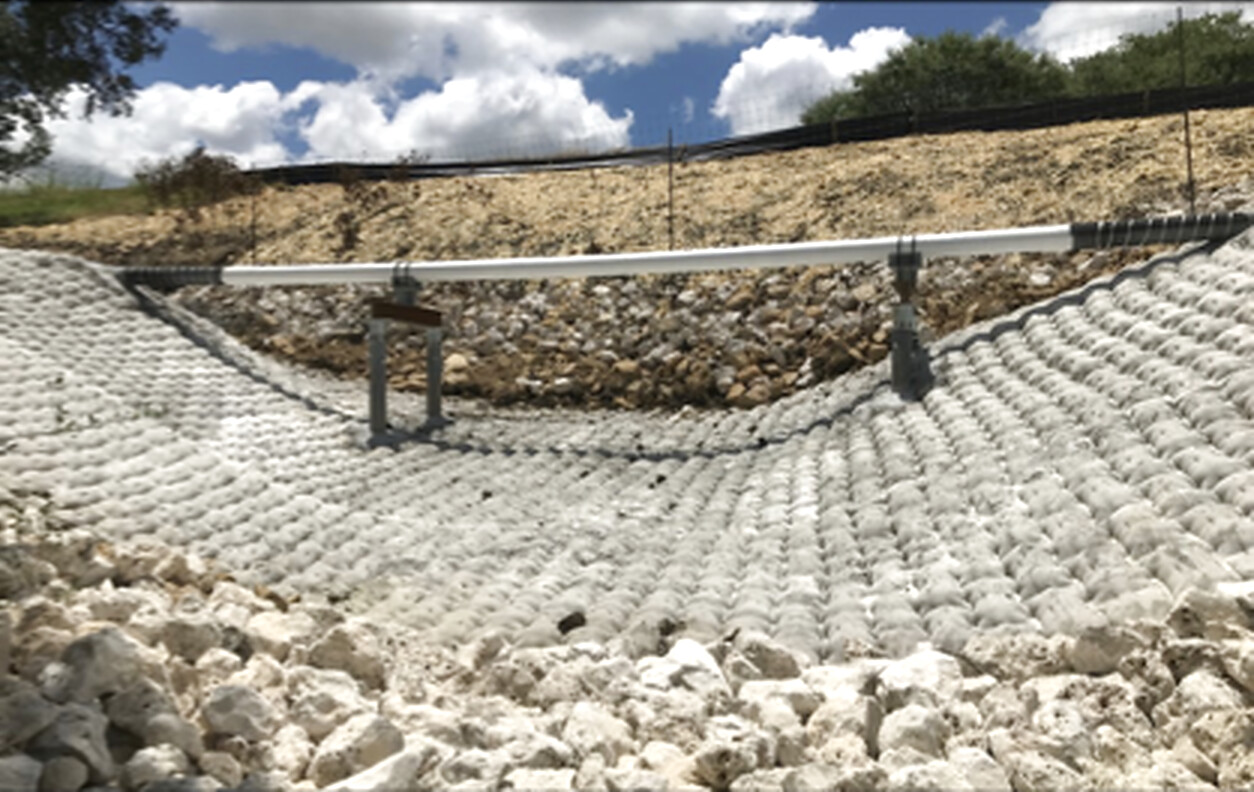
Over time, erosion can leave a pipeline spanning a ravine it was never meant to cross. That calls for prompt work: support beneath the pipeline and armoring around it.
Before
After
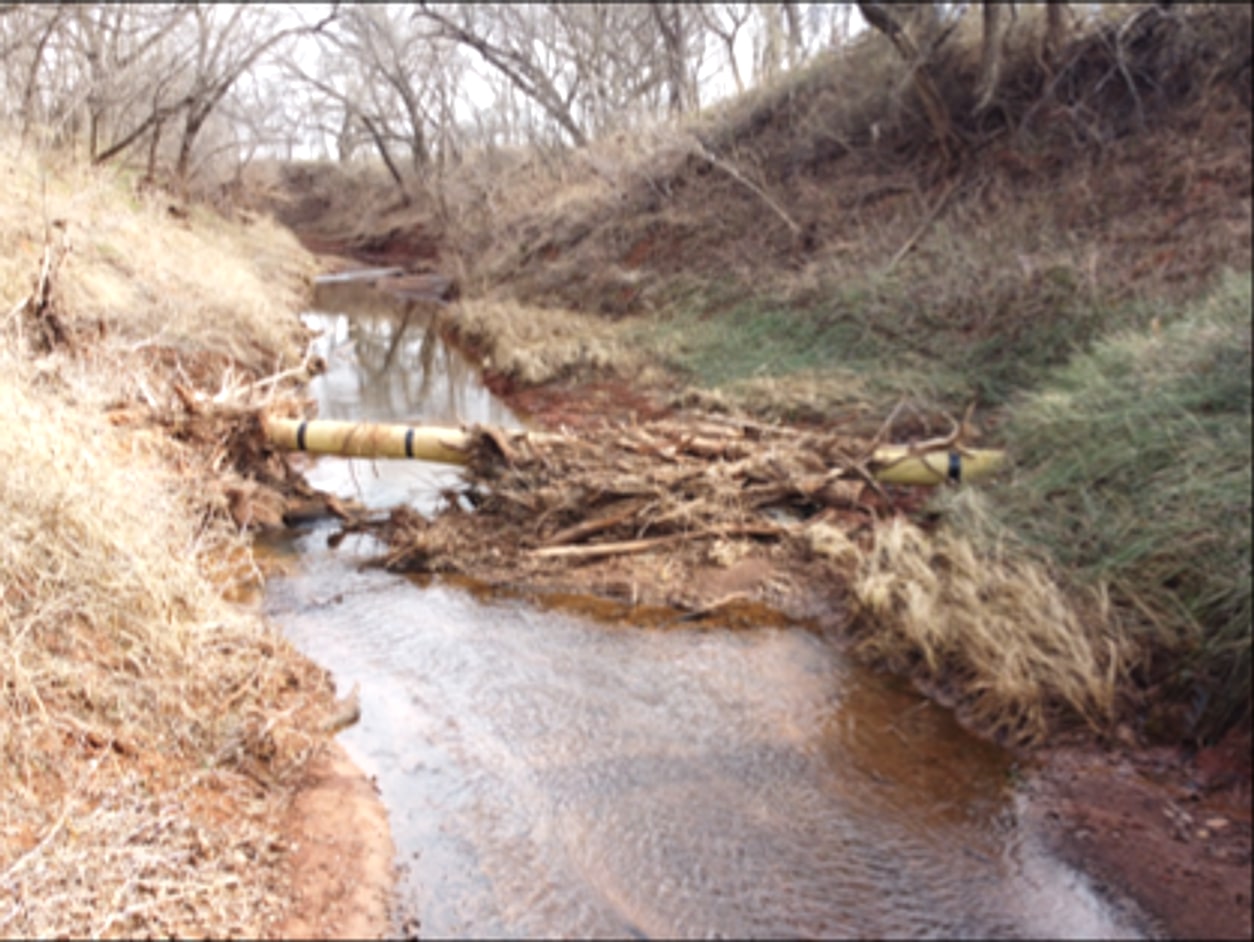
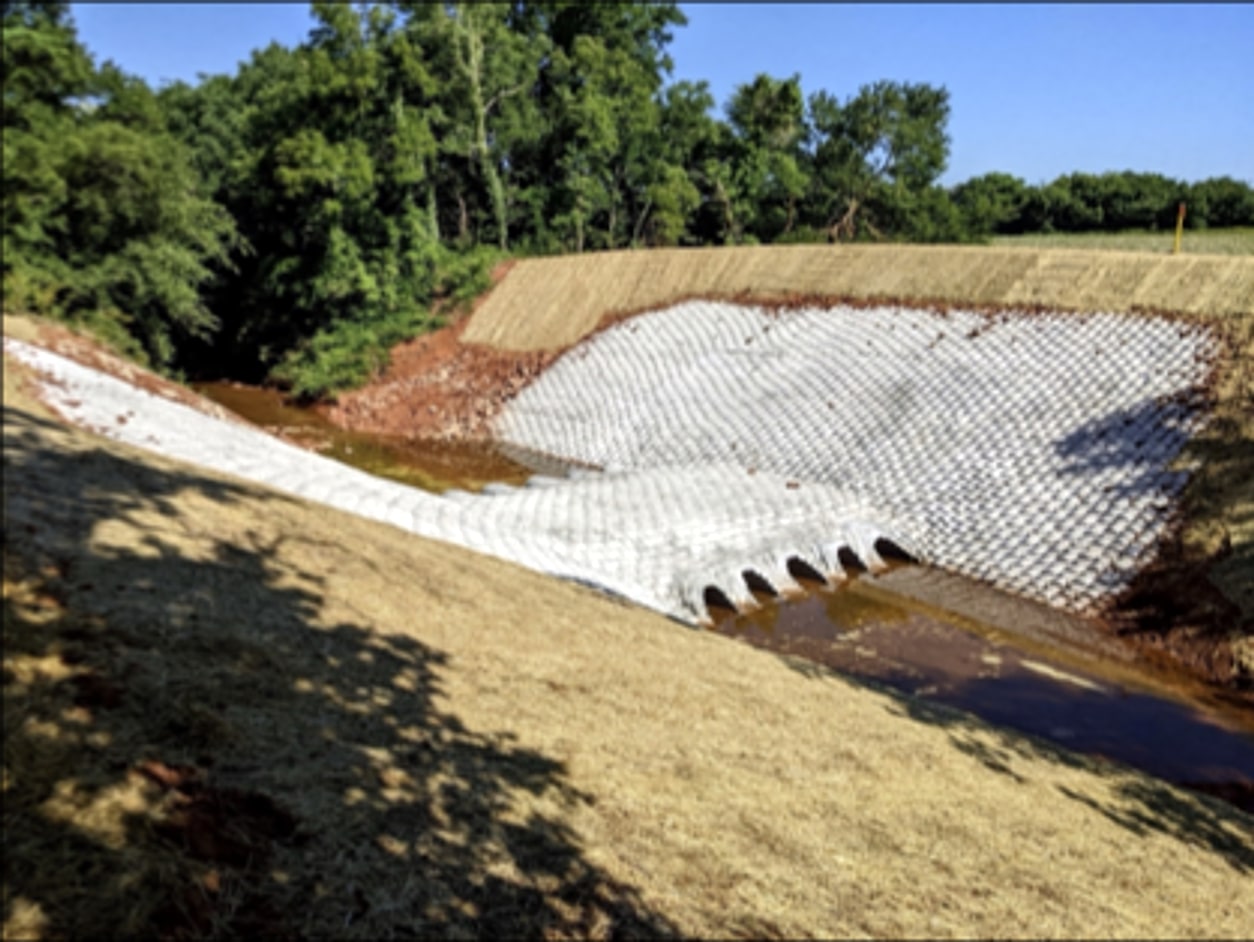
Debris and high flows scoured this creek crossing until the line beneath it was exposed. We restored the cover and rebuilt the crossing over new culverts.
Before
After
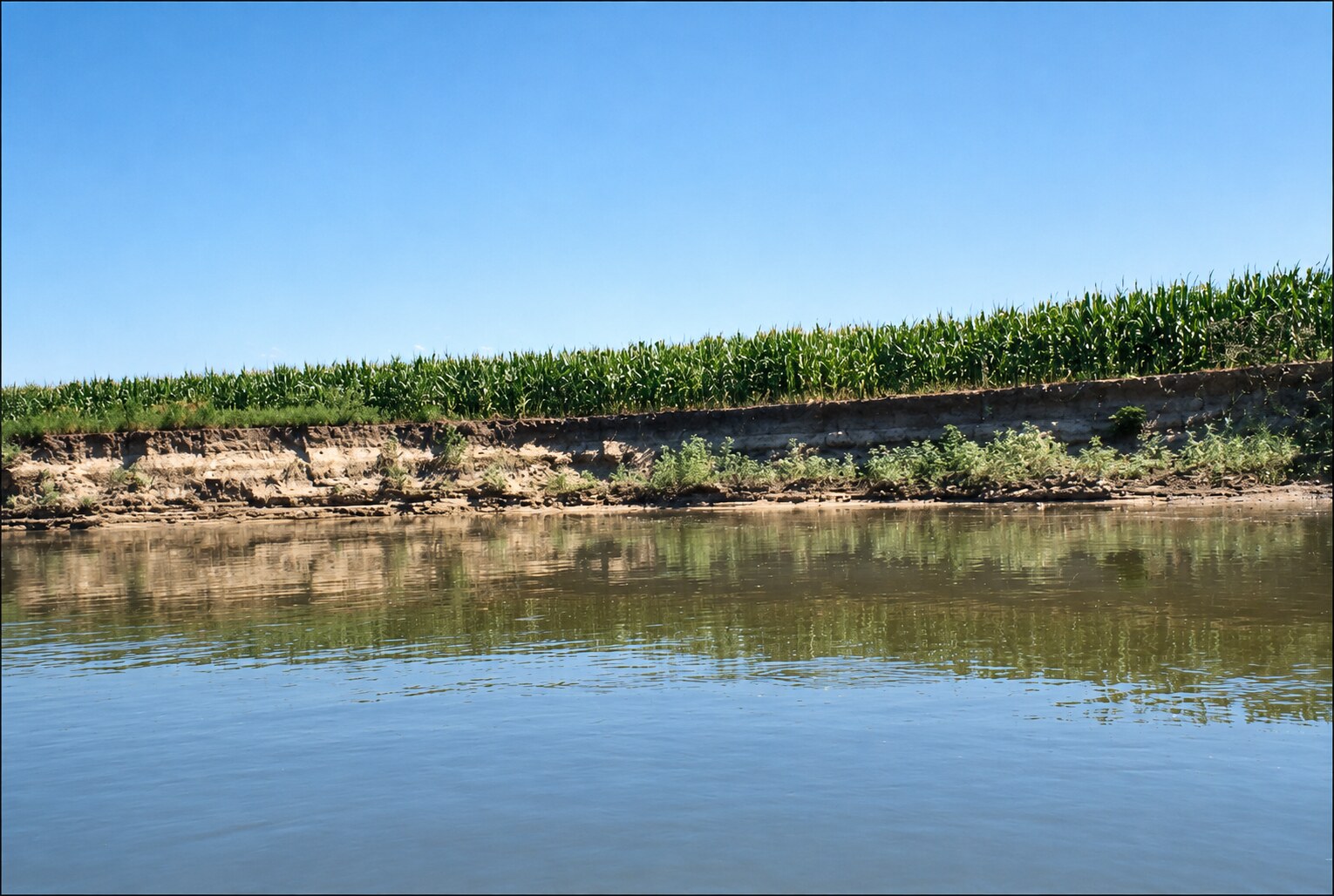
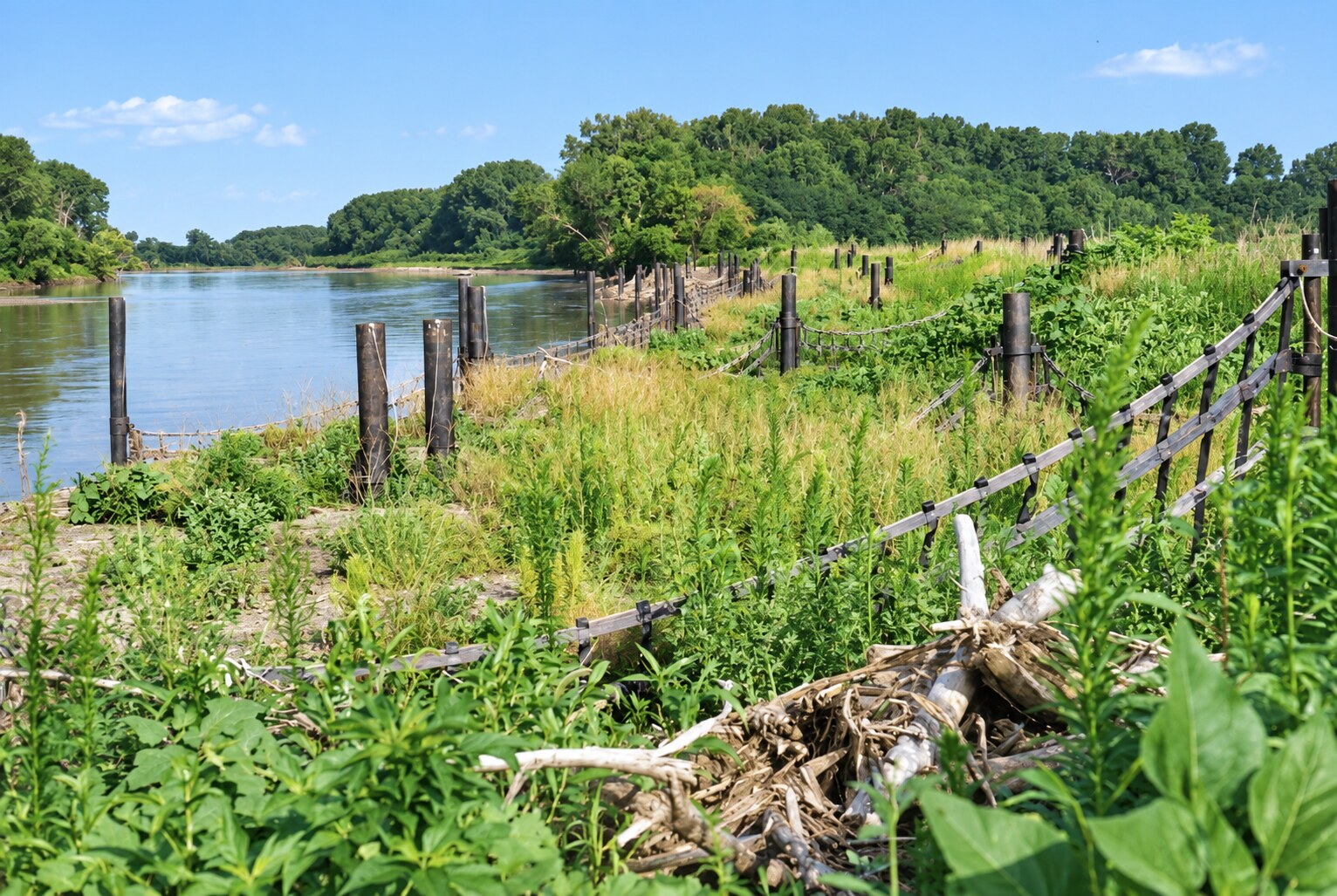
The river was taking this bank, and the farmland above it, with every high water event. Five years after the work, the bank is rebuilt and green.
Before
After
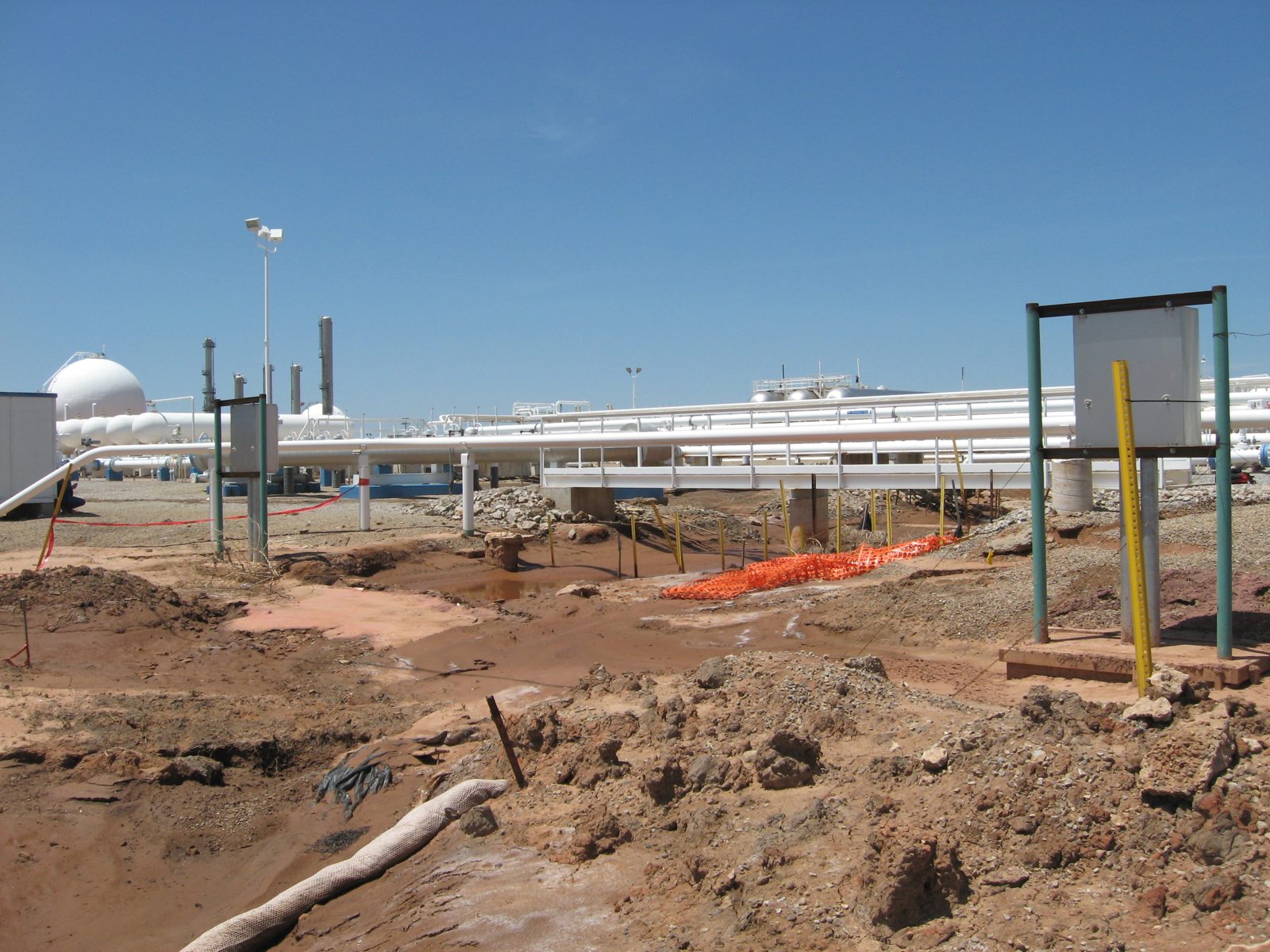
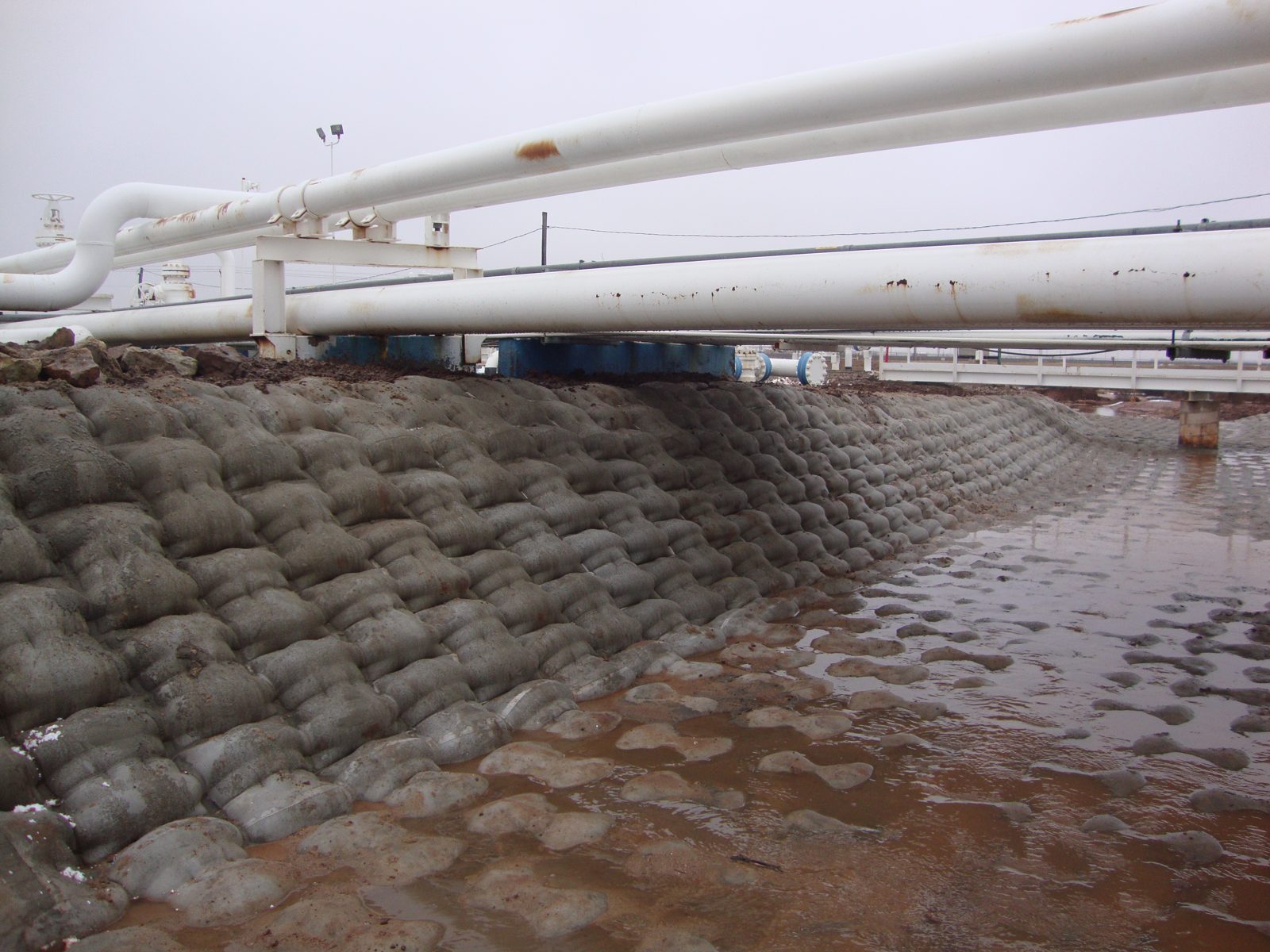
Runoff at this processing plant had carved the drainage under the pipe racks into open ditches. We lined the channel to protect the ground the supports stand on and mitigate sediment flow.
Before
After
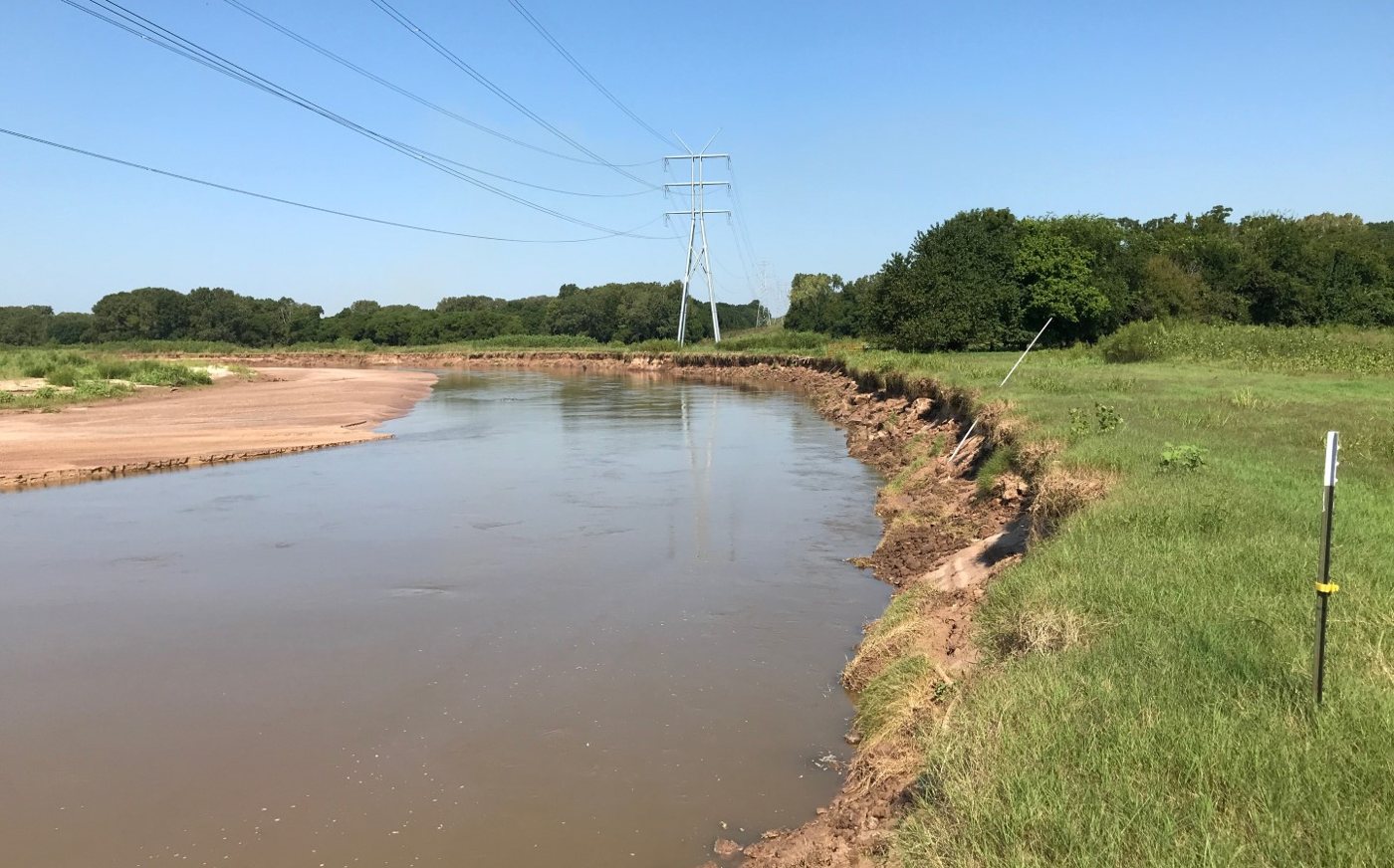
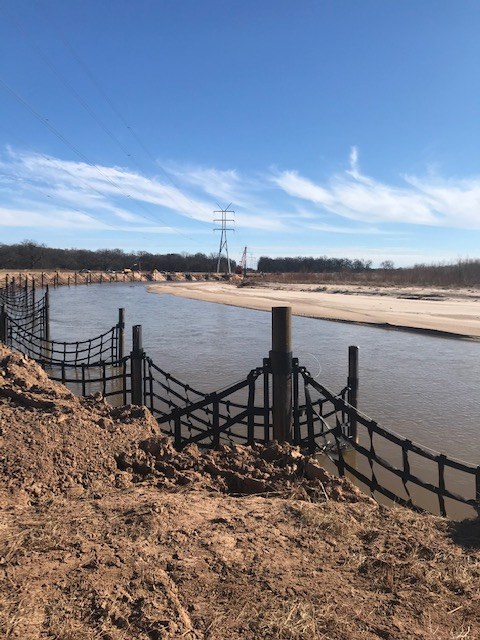
When a river starts cutting toward a transmission line, the structures beside it are next. We armored the banks and channels to protect the utility infrastructure.
How we work
One team, from site investigation through construction.
Whatever the industry, every project follows the same six steps, and our own people carry it through each one. Nothing is handed off to another firm along the way.